06/01/2026
Asscher Diamonds Explained: The Cut That Defines Sophisticated Sparkle
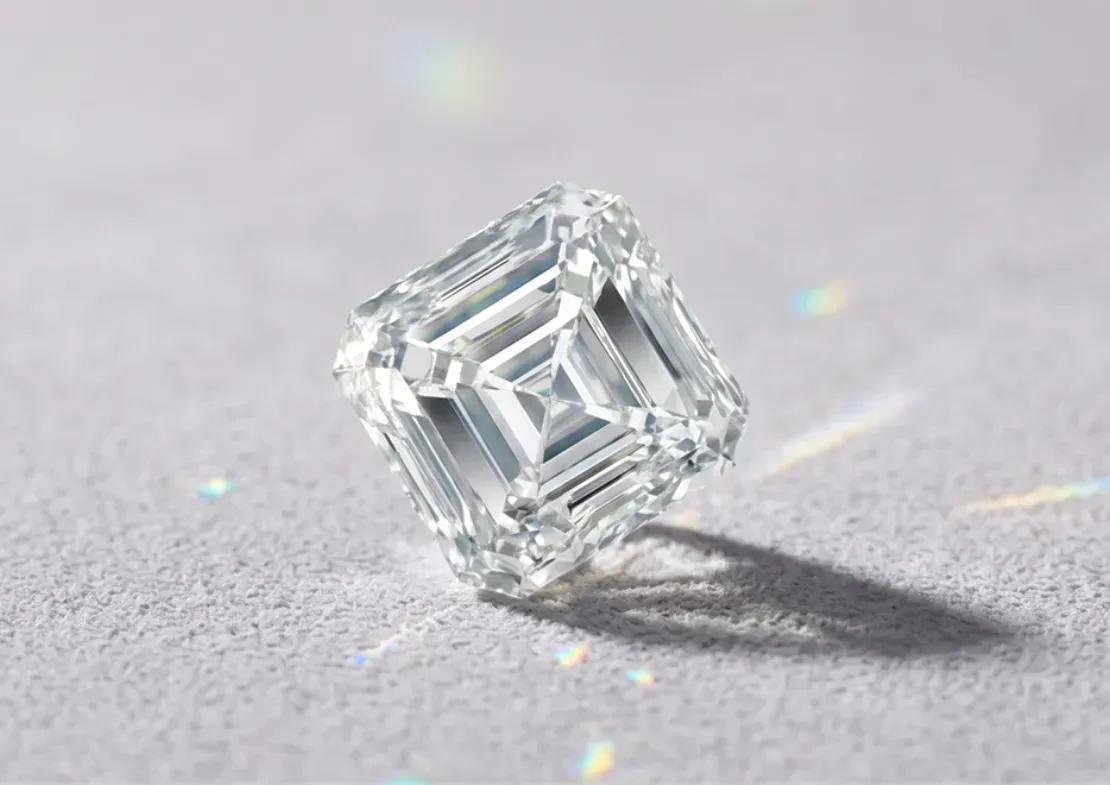
The Asscher cut diamond is one of the most distinctive and elegant diamond shapes in fine jewelry. Known for its bold geometry, deep clarity, and unmistakable Art Deco appeal, the Asscher cut continues to captivate collectors, designers, and engagement ring lovers more than a century after it was first created. With its mesmerizing "hall of mirrors" effect and square step-cut architecture, this diamond is simultaneously timeless and deeply architectural in its beauty.
Today, the Asscher cut holds just 1% of the total diamond market — which means choosing one is a deliberate statement of individuality. Asscher cuts are experiencing renewed popularity in 2026, driven by the broader surge in vintage-inspired jewelry trends, celebrity influence, and a growing appetite among modern buyers for something genuinely distinctive. If you are shopping for an Asscher cut engagement ring or simply exploring diamond shapes before making a decision, understanding what makes the Asscher cut so special helps you appreciate why it has endured for well over a century.
The History of the Asscher Cut Diamond
The Asscher cut was first created in 1902 by Joseph Asscher, a master diamond cutter from Amsterdam and founder of the Asscher Diamond Company — now known as the Royal Asscher Diamond Company. At the time, diamond cutting was evolving rapidly, and Joseph Asscher introduced a revolutionary square step-cut design that maximized structural elegance and light reflection in equal measure.
The cut gained widespread popularity during the Art Deco era of the 1920s and 1930s, when geometric shapes, bold symmetry, and architectural precision dominated both jewelry and fashion design. The Asscher cut was perfectly suited to the era — a shape that looked as if it had been drawn with a ruler and compass rather than cut from a rough stone.
In 2001, the Asscher family introduced the Royal Asscher Cut — a refined version featuring 74 facets (compared to 58 in the original) that enhanced brilliance while preserving the cut's vintage character. Both versions remain available today, each with its own distinct personality.
Two famous historical facts most people don't know: The Asscher cut was used to cleave the Cullinan Diamond — the largest rough diamond ever discovered — a commission that cemented the Asscher family's place in diamond history. And one of the most famous Asscher cut diamonds ever worn was the Krupp Diamond (33.19 carats), later owned by Elizabeth Taylor, which became one of the most photographed gems in the world. For context on how diamond cutting and certification have evolved since 1902, Beverly's GIA certified jewelry guide explains exactly what modern grading covers.
What Makes an Asscher Cut Unique?
The Asscher cut is often described as a square emerald cut — but it has its own entirely distinct personality.
Key characteristics:
Square shape with cropped (clipped) corners
Deep step-cut facets arranged in concentric squares
High crown and deep pavilion for dramatic visual depth
A signature "hall of mirrors" effect when viewed from above
A distinctive "X" pattern visible through the table — the hallmark of a quality Asscher cut
Unlike brilliant cuts that produce intense, scattered sparkle, Asscher diamonds deliver a more calm, elegant, and glassy reflection pattern that draws your eye inward toward the center of the stone. A well-cut Asscher shows perfect concentric squares — almost like looking into a geometric tunnel of light. It is a profoundly different visual experience from any other diamond shape.
Asscher Diamond Facets and Structure
Most modern Asscher cuts feature between 58 and 74 facets, depending on the version:
Original Asscher cut: 58 facets
Royal Asscher cut (2001 onwards): 74 facets
The step-cut structure means facets are arranged in parallel lines rather than the triangular patterns of brilliant cuts. This is what creates the Asscher's signature reflective depth — broad, sweeping flashes of light rather than the fine glitter of a round diamond.
Why Asscher Diamonds Look So Different
Asscher diamonds behave unlike any other diamond shape because of their step-cut structure:
They emphasize clarity over sparkle — the stone's interior is on full display
They reflect light in broad, dramatic flashes instead of fine glitter
They appear deeper and more dimensional face-up than most other cuts
They often show more of the diamond's interior character — depth, tone, and natural clarity
Because the open step facets act almost like windows into the stone, Asscher cuts require high clarity and good color grading to look their best. Inclusions that might hide inside a brilliant-cut diamond are far more visible through the Asscher's large, open facets — which is why clarity is the first thing to prioritize when choosing one. Beverly's Diamonds 101 guide covers clarity grades, color, and the 4Cs in full detail to help you understand what to look for before purchasing.
Asscher Cut vs Emerald Cut: What's the Difference?
These two shapes are frequently confused, but the differences are clear once you know what to look for:
Modern Popularity and the 2026 Comeback
After its Art Deco peak, the Asscher cut faded into vintage exclusivity for several decades. Its strong comeback in the early 2000s — driven by a renewed appetite for Art Deco design and heirloom-inspired aesthetics — has continued to build through 2026.
Today, Asscher diamonds are chosen by buyers who want a unique engagement ring with a vintage-inspired aesthetic, a bold and architectural diamond shape, and something genuinely different from the round and princess cuts that dominate bridal jewelry. The Asscher's 1% market share is not a limitation — it is the point. Wearing one is a choice that immediately signals taste, intention, and an appreciation for jewelry history.
Asscher cuts are also increasingly popular as center stones for three-stone engagement rings and halo engagement rings, where the geometric shape creates a striking visual contrast against the surrounding diamonds. And for couples exploring lab grown diamond options, lab grown Asscher cuts offer the same geometric depth and step-cut character at more accessible price points.
GIA and IGI Certification for Asscher Diamonds
When purchasing an Asscher diamond, certification is not optional — it is essential. Diamonds with excellent grades and independent certification from respected laboratories consistently perform better in both immediate value and long-term investment.
GIA (Gemological Institute of America) The GIA is the global gold standard for diamond grading. GIA reports evaluate the 4Cs — cut, color, clarity, and carat weight — and are the most trusted grading documents in the industry worldwide. Note that GIA does not assign a standardized cut grade to fancy shapes like the Asscher, focusing instead on proportions, symmetry, and polish — all of which matter enormously for step-cut diamonds.
IGI (International Gemological Institute) The IGI is widely used for both natural and lab grown diamonds, particularly in modern retail and online markets. IGI reports may include more detailed cut information for fancy shapes in some cases. For lab grown Asscher diamonds, IGI certification is the most commonly seen grading document.
Because Asscher cuts rely so heavily on visual light performance — the quality of that "hall of mirrors" effect is not fully captured in any grading report — always view an Asscher diamond in person or request HD video before purchasing. A grading report tells you what the stone is. Seeing it under light tells you whether it is the right one. Beverly's GIA certified diamond collection includes independently certified stones available for in-person viewing at the St. Thomas showroom.
Fun Facts About Asscher Diamonds
- The Asscher cut was one of the first patented diamond cuts in history
- It was created during an era when diamonds were still cut almost entirely by hand
- The design drew influence from Renaissance table-cut styles centuries earlier
- The distinctive "X" pattern visible through the table is the hallmark of a properly cut Asscher — if you don't see it clearly, the cut quality is lacking
- Asscher diamonds tend to appear slightly smaller face-up than round diamonds of the same carat weight due to their deep pavilion structure — factor this into your carat selection
Pros and Cons of Asscher Diamonds
Pros:
- Extremely elegant and genuinely unique — only ~1% of diamond buyers choose this shape
- Unmistakable vintage Art Deco appeal with timeless longevity
- Strong geometric symmetry and architectural visual impact
- The "hall of mirrors" effect is unlike anything a brilliant cut can produce
Cons:
- Requires high clarity — VS1 or higher recommended, as inclusions are more visible through open step facets
- Less sparkle than brilliant cuts — the Asscher's beauty is in depth and reflection, not glitter
- Can appear smaller face-up for its carat weight due to deep pavilion — size up if face-up presence matters
How to Choose the Perfect Asscher Diamond
When selecting an Asscher diamond, prioritize these factors in order:
- Clarity: VS1 or higher is strongly recommended. VS2 can work with careful selection but requires in-person inspection.
- Color: G or better for a clean, icy appearance. The open facets make color easier to detect than in brilliant cuts.
- Symmetry: Exceptional symmetry is essential — the concentric square pattern falls apart without it. Look for "Excellent" or "Very Good" symmetry on the grading report.
- Depth and table balance: Impacts how light moves through the stone and how dramatic the hall-of-mirrors effect appears.
- Visual inspection: Non-negotiable. Always view HD video or see the stone in person. The grading report describes the diamond — only light reveals whether it is truly beautiful.
Beverly's team at the St. Thomas showroom hand-selects every diamond in the collection for brilliance, symmetry, and light performance — not just grading report numbers. If you are unsure what ring size to order before visiting or purchasing online, Beverly's ring size chart makes it easy to measure accurately at home.
Discover Asscher Cut Diamonds at Beverly's Jewelry in St. Thomas
At Beverly's Jewelry in St. Thomas, U.S. Virgin Islands, every diamond is carefully hand-selected and evaluated for brilliance, symmetry, and overall light performance by experienced gemologists before it reaches the showcase. The Asscher cut — with its uncompromising demand for clarity and symmetry — is a shape Beverly's team understands and curates with particular care.
Whether you are searching for a distinctive Asscher cut engagement ring, a luxury diamond jewelry piece in a step-cut style, or want to explore custom ring design with an Asscher center stone — Beverly's offers the certified selection, expert guidance, and in-person viewing experience this particular diamond demands.Shopping in St. Thomas also means duty-free pricing on all certified fine jewelry — a meaningful advantage when investing in a diamond of this caliber. Every diamond should feel as extraordinary as the moment it represents.