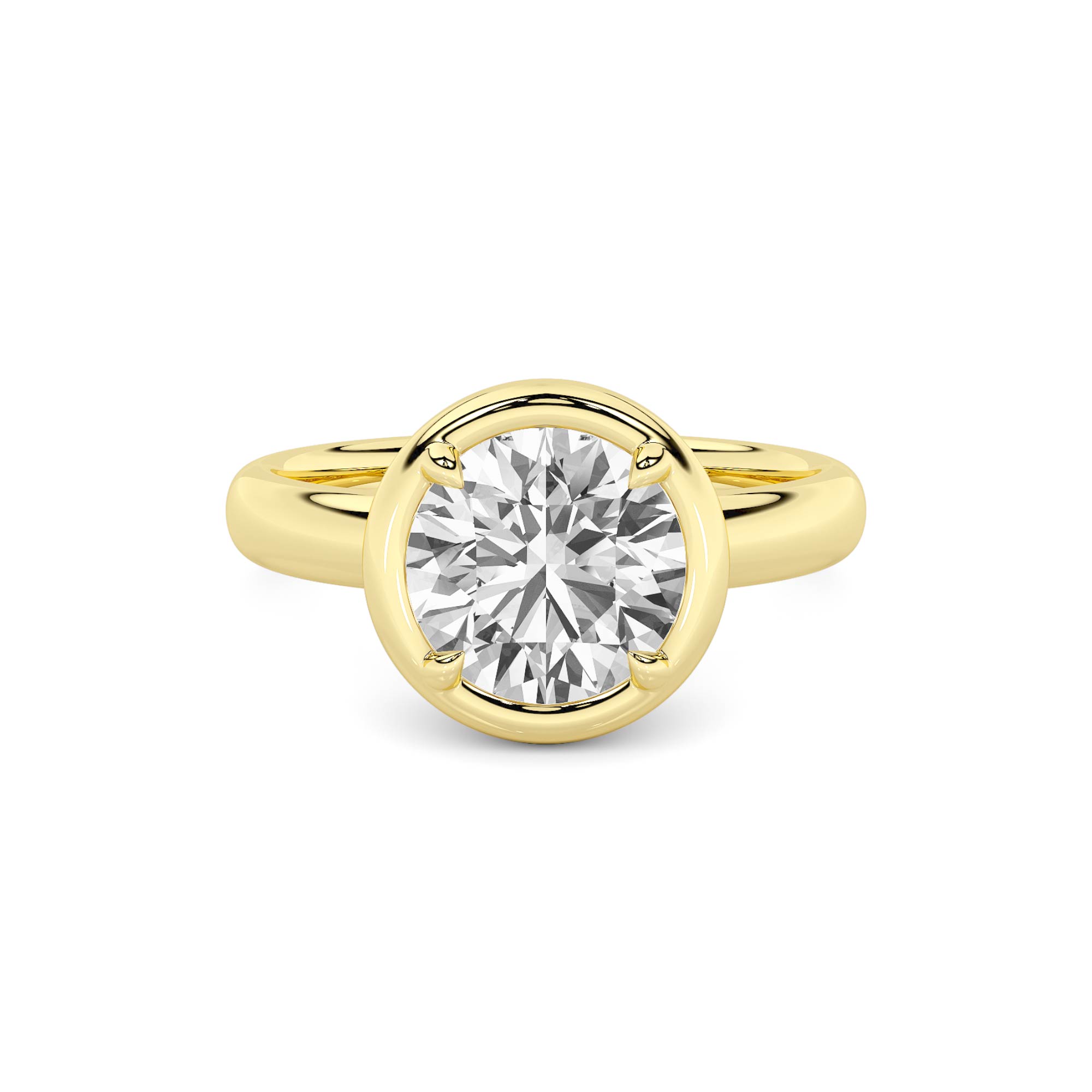
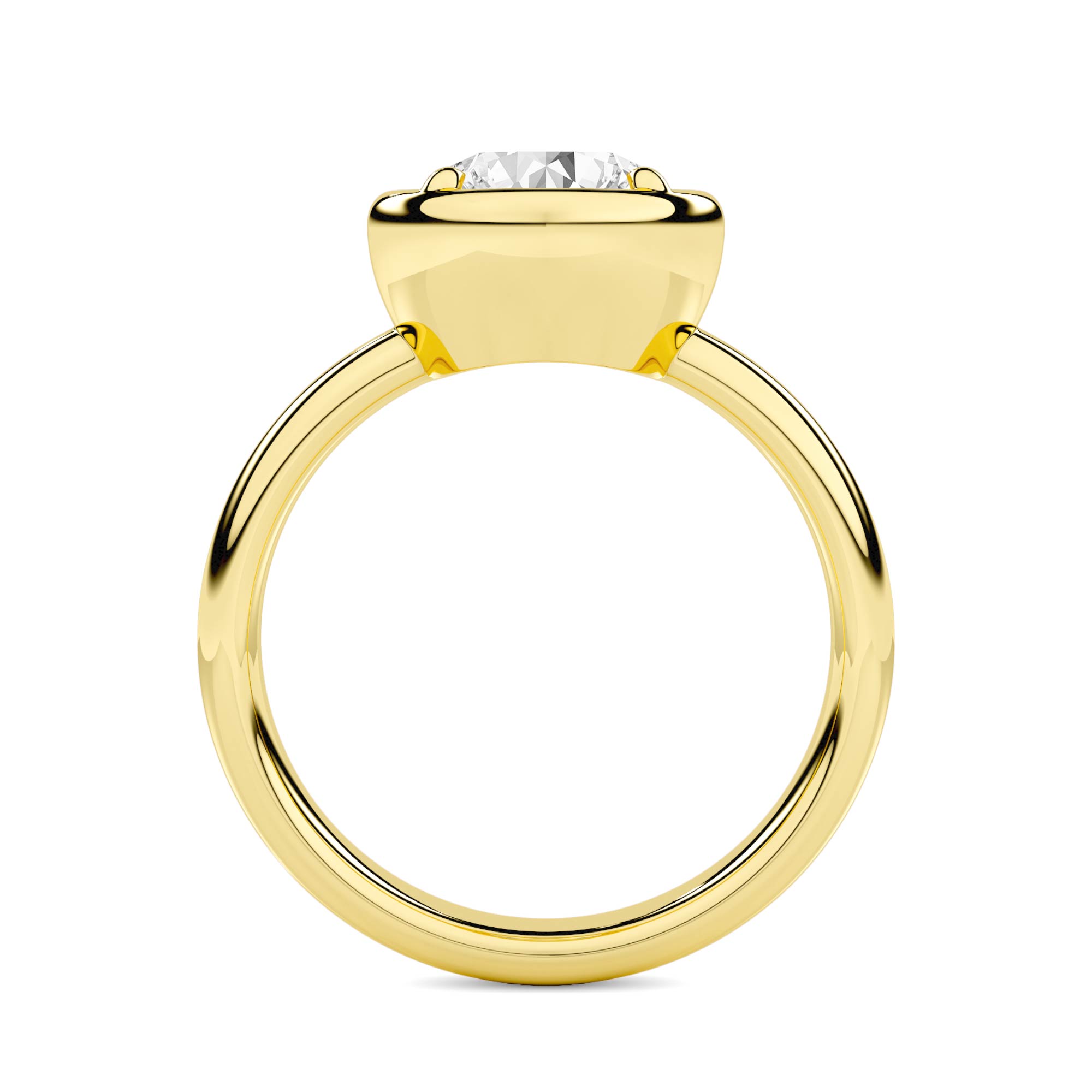
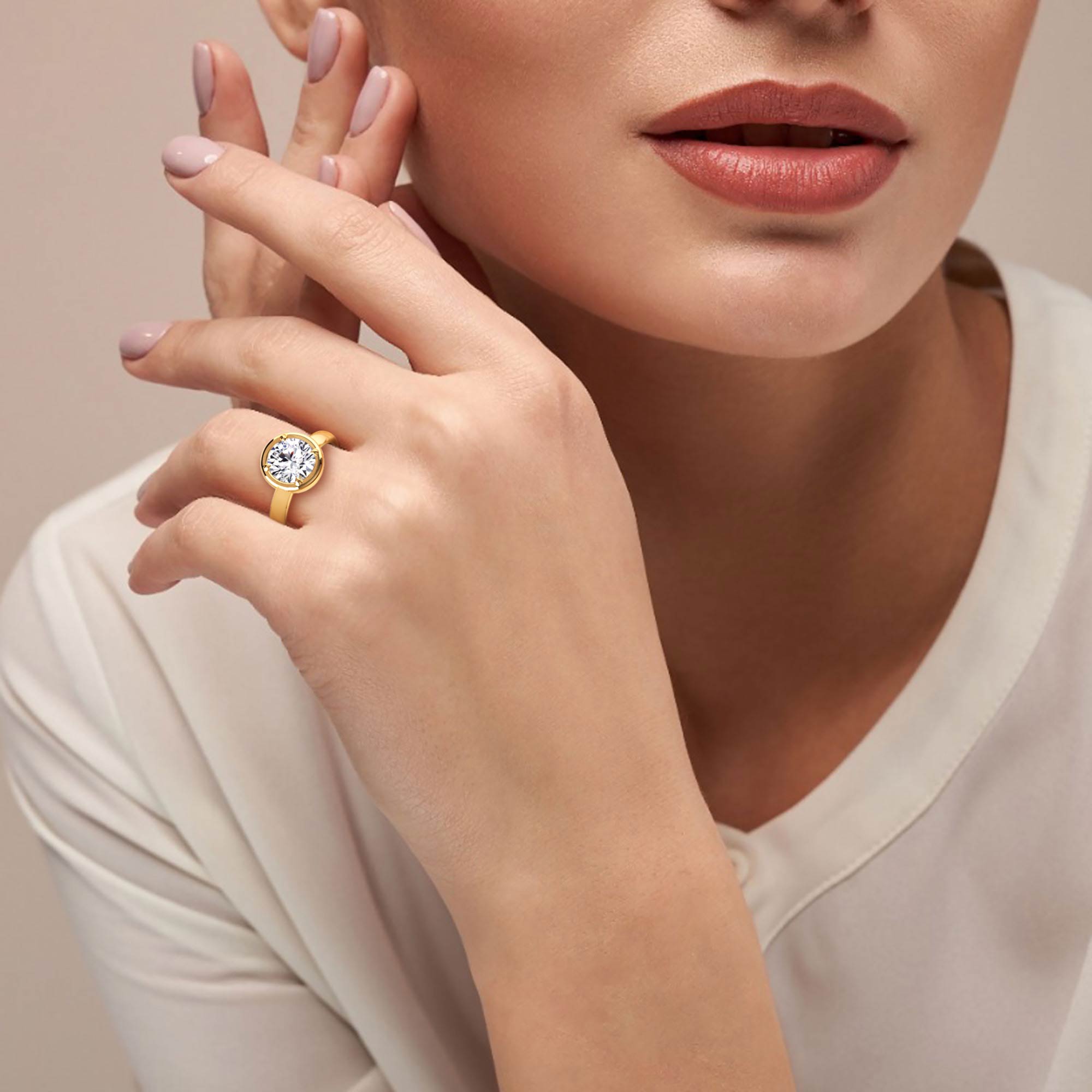
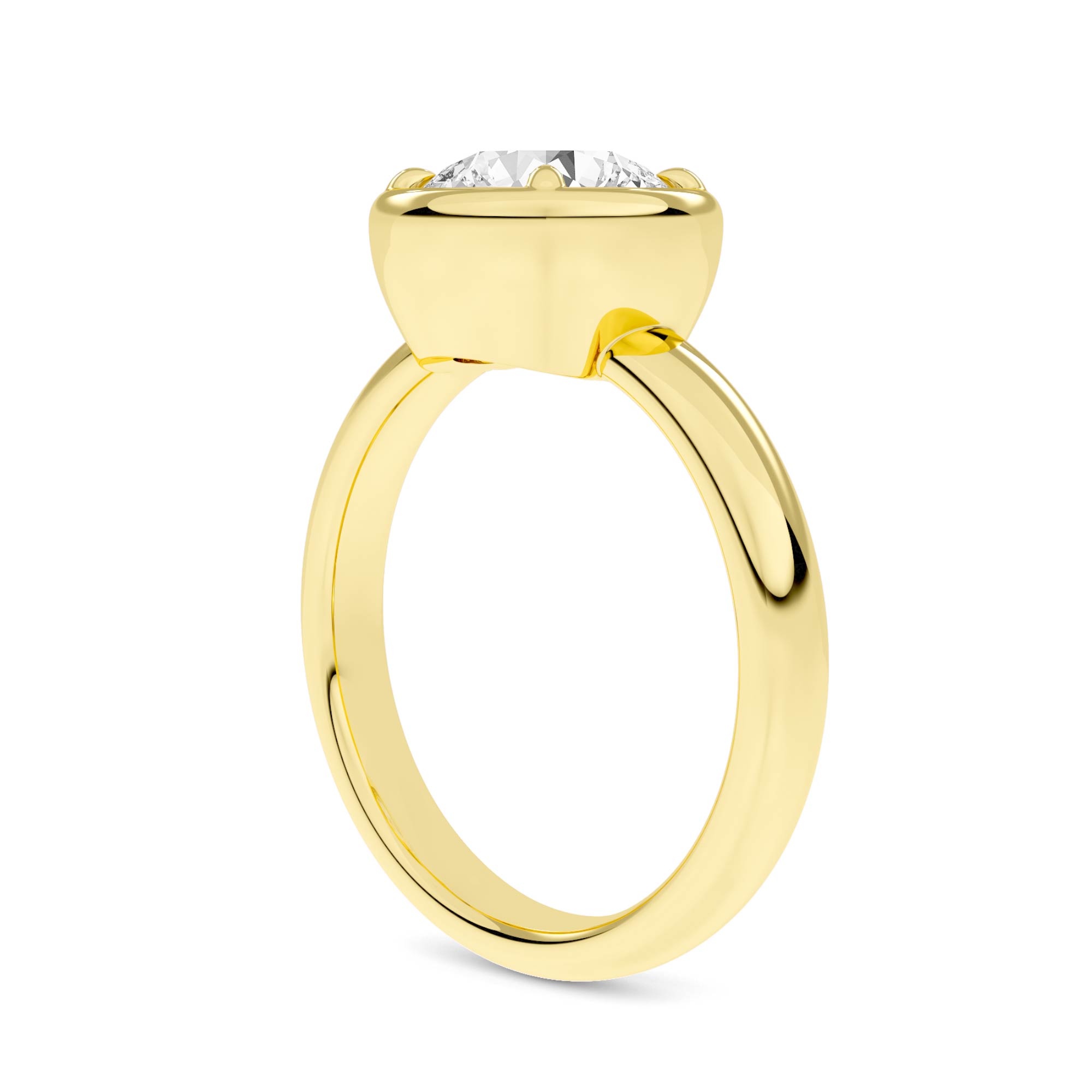
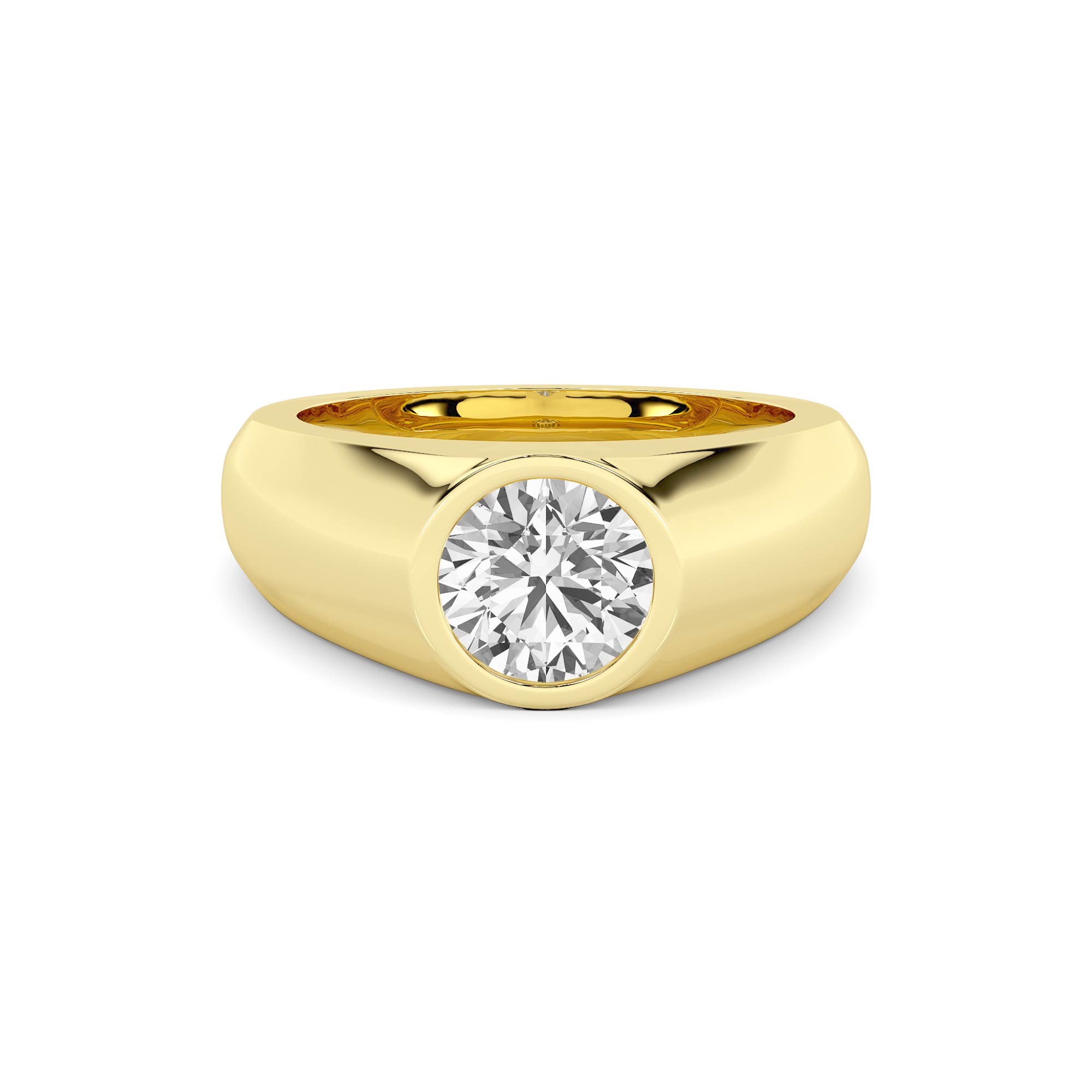
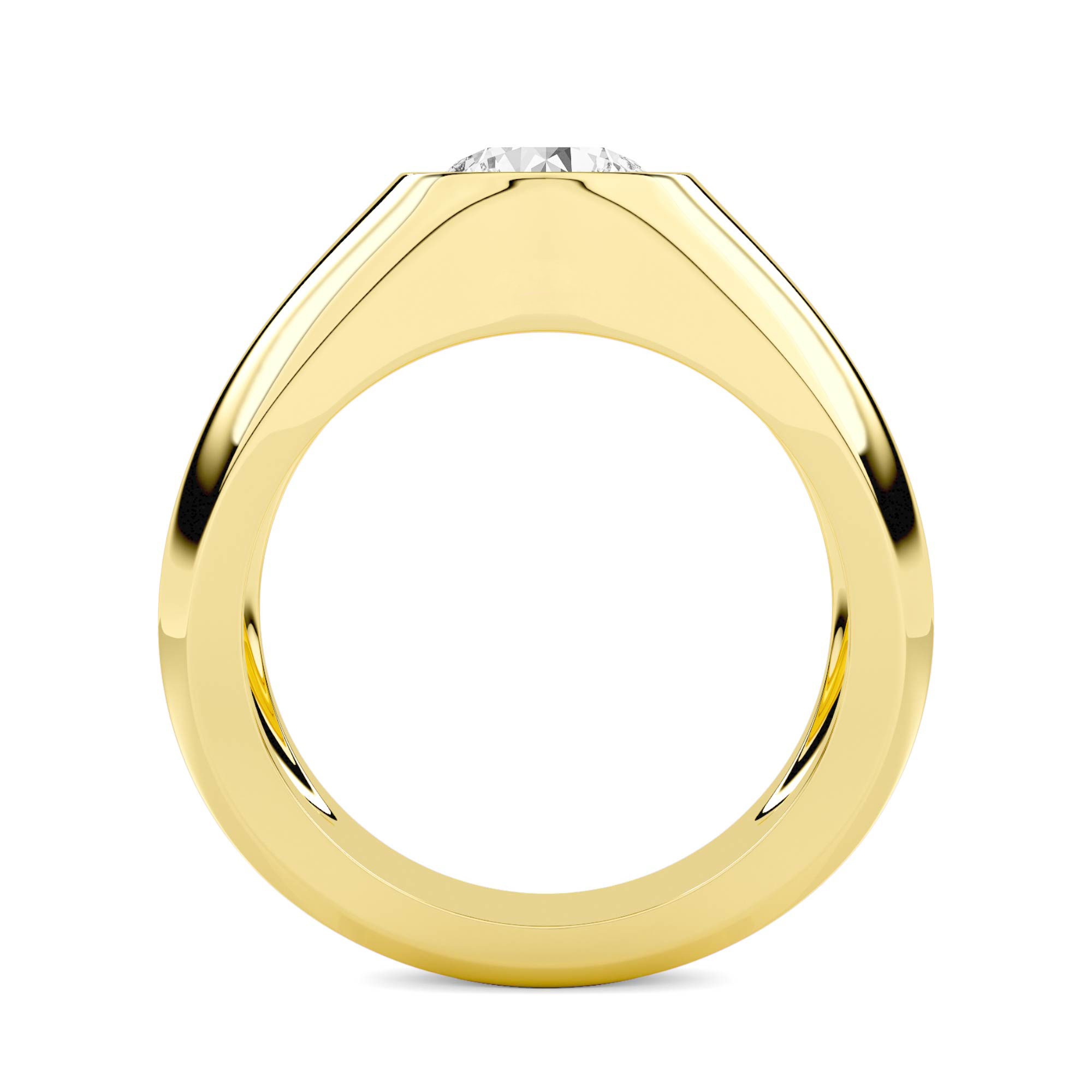
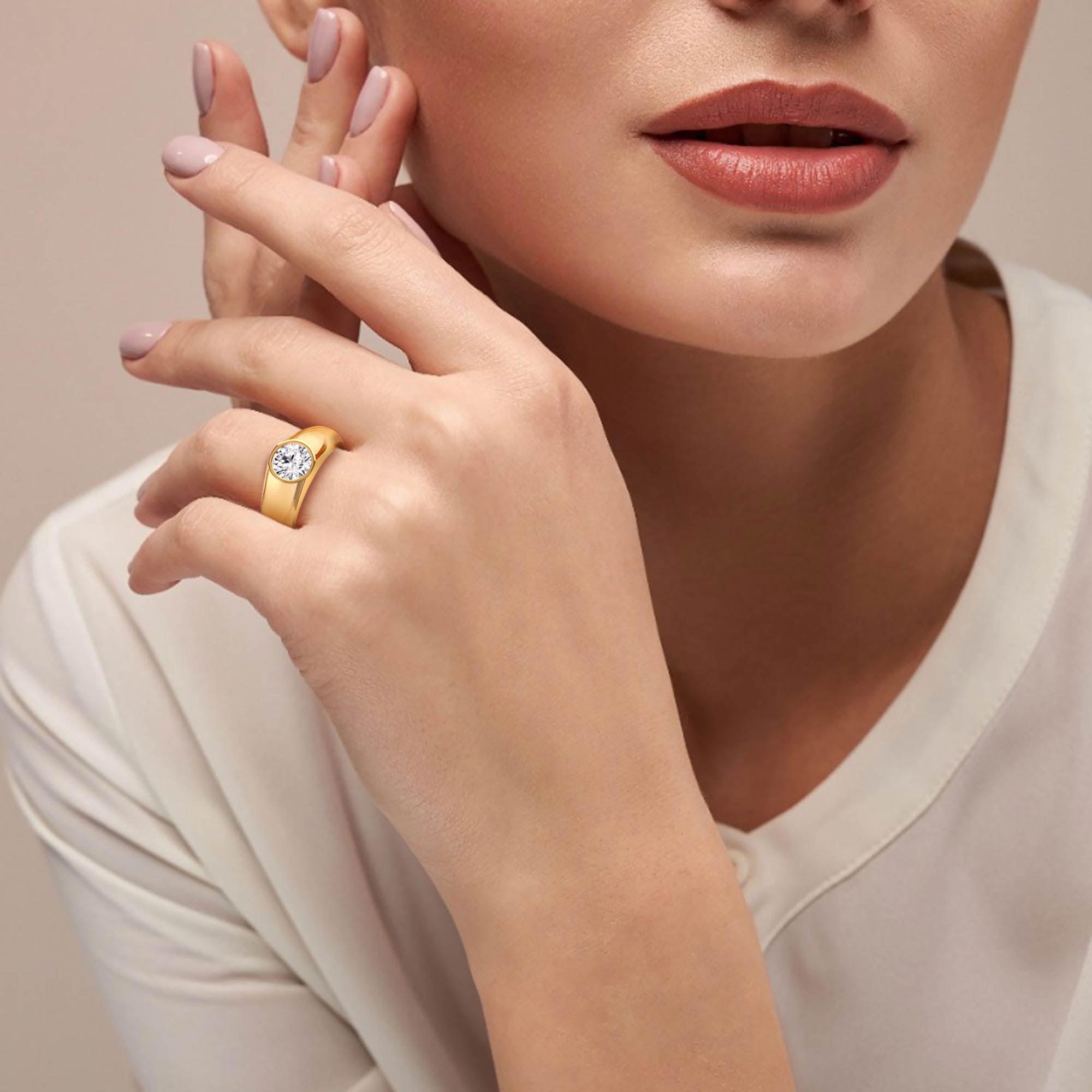
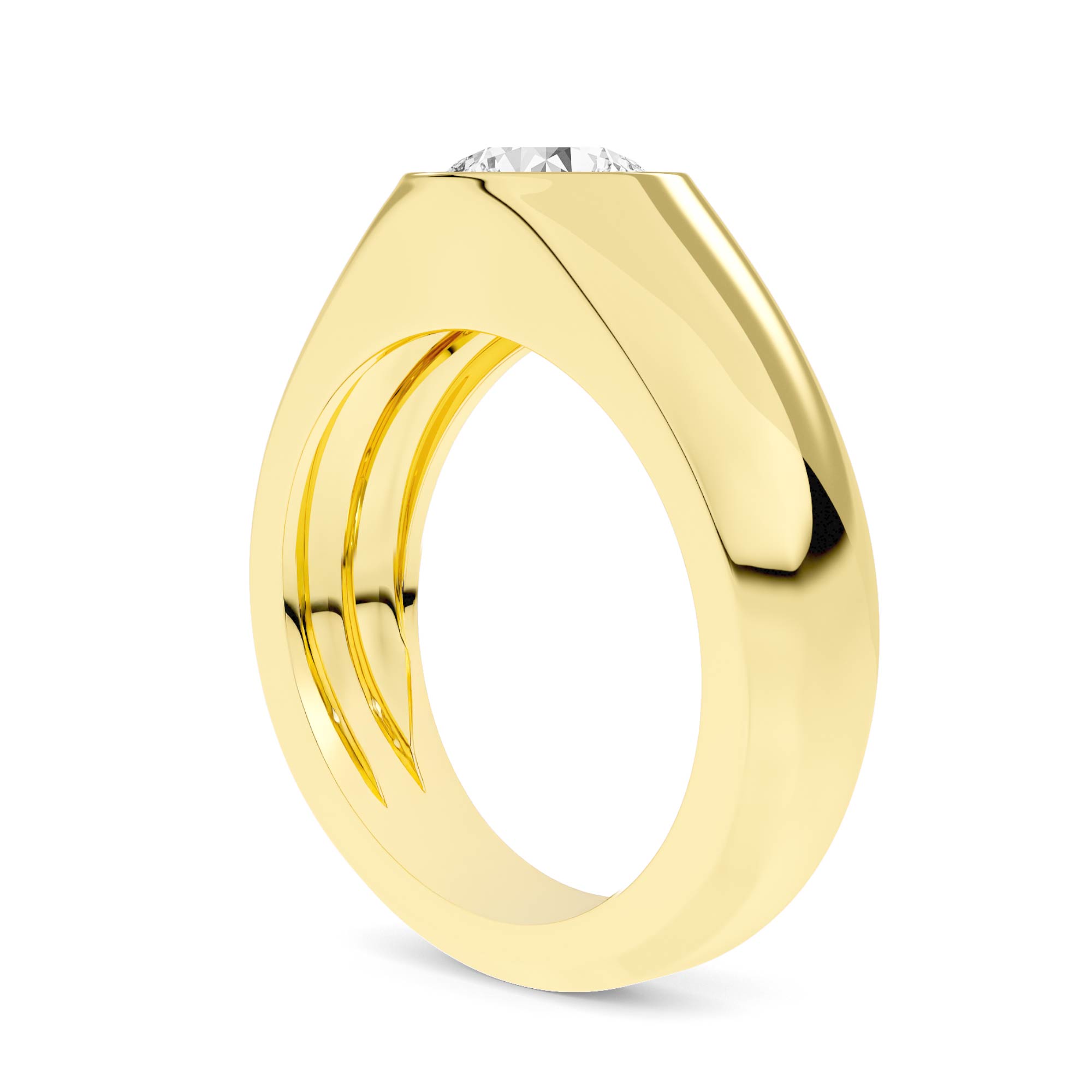
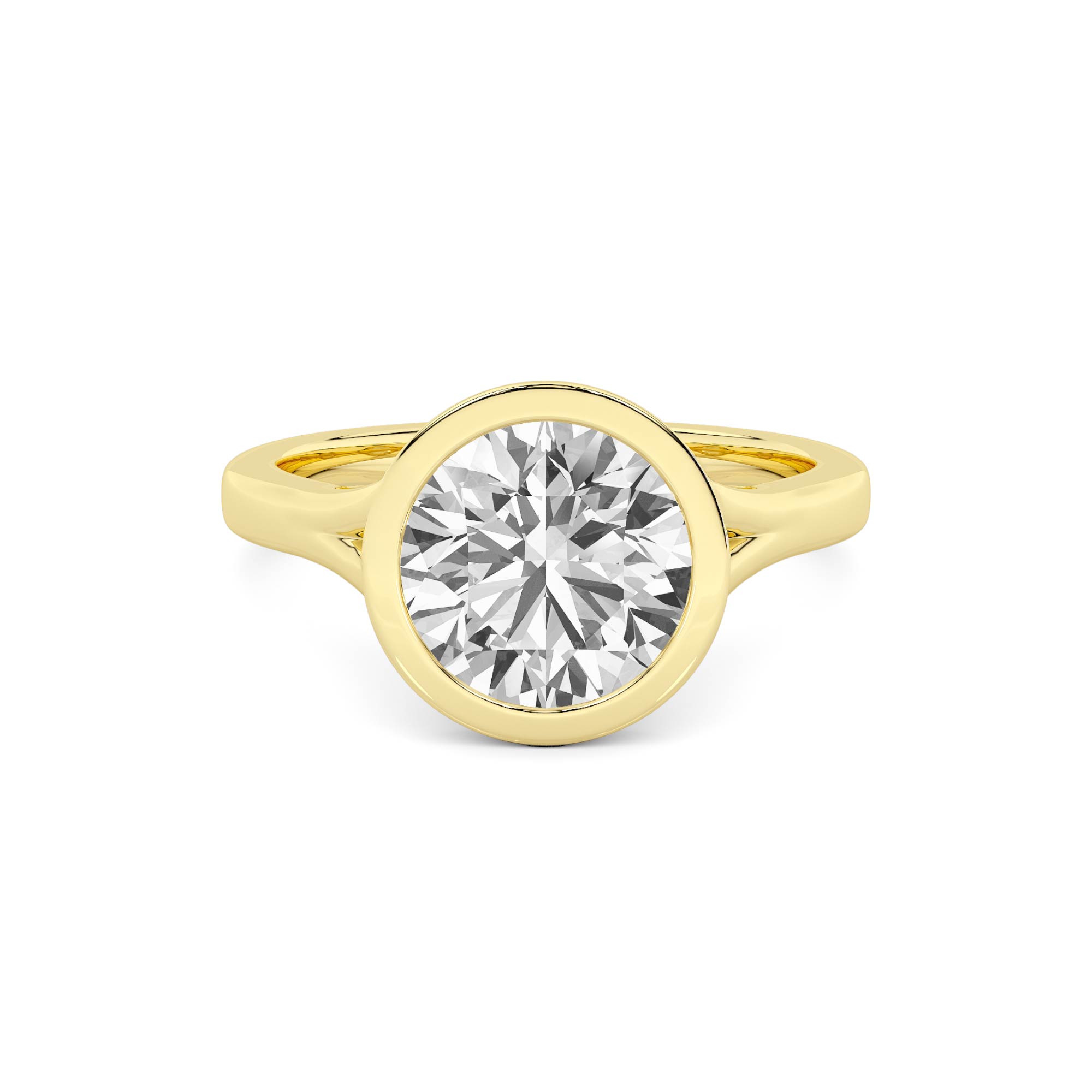
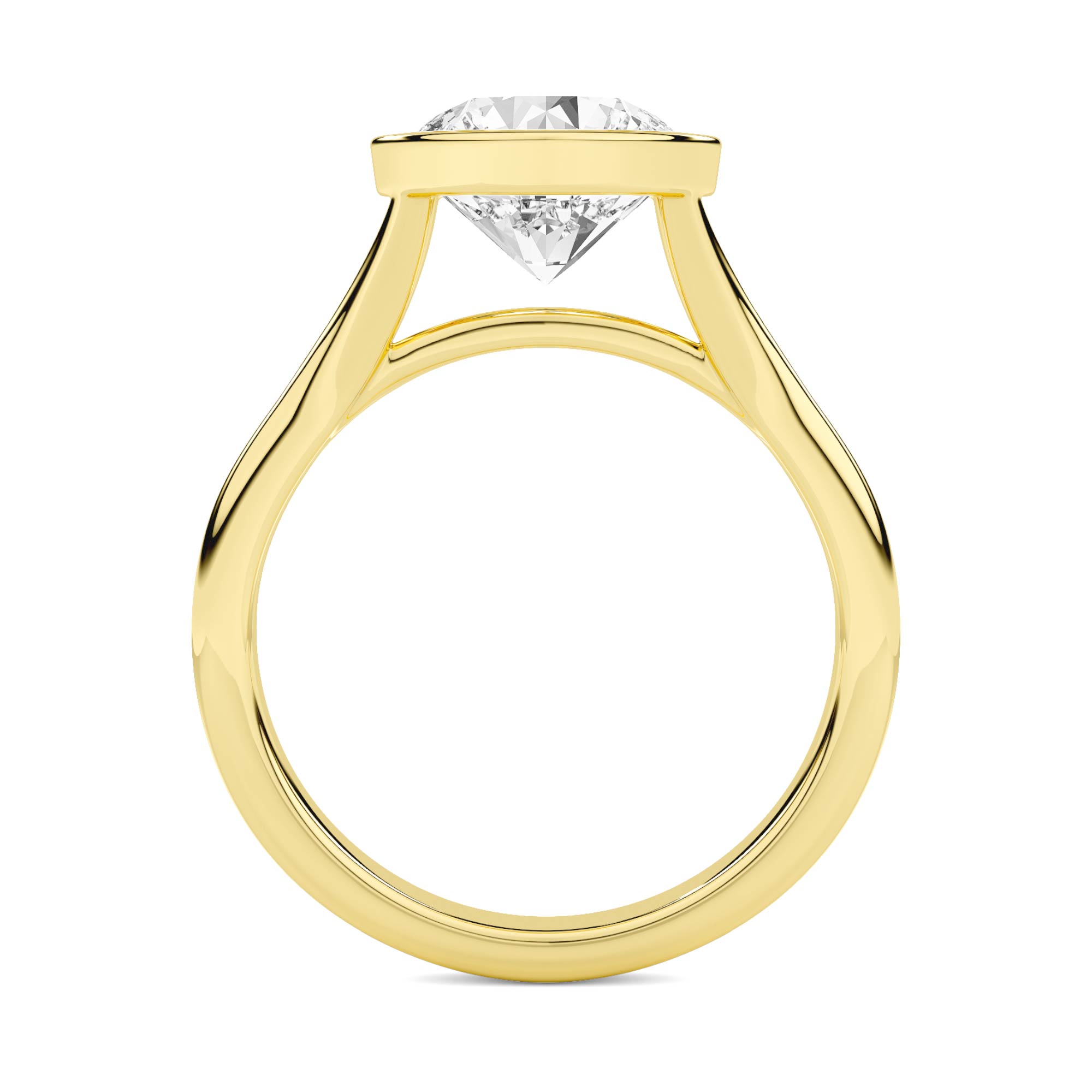
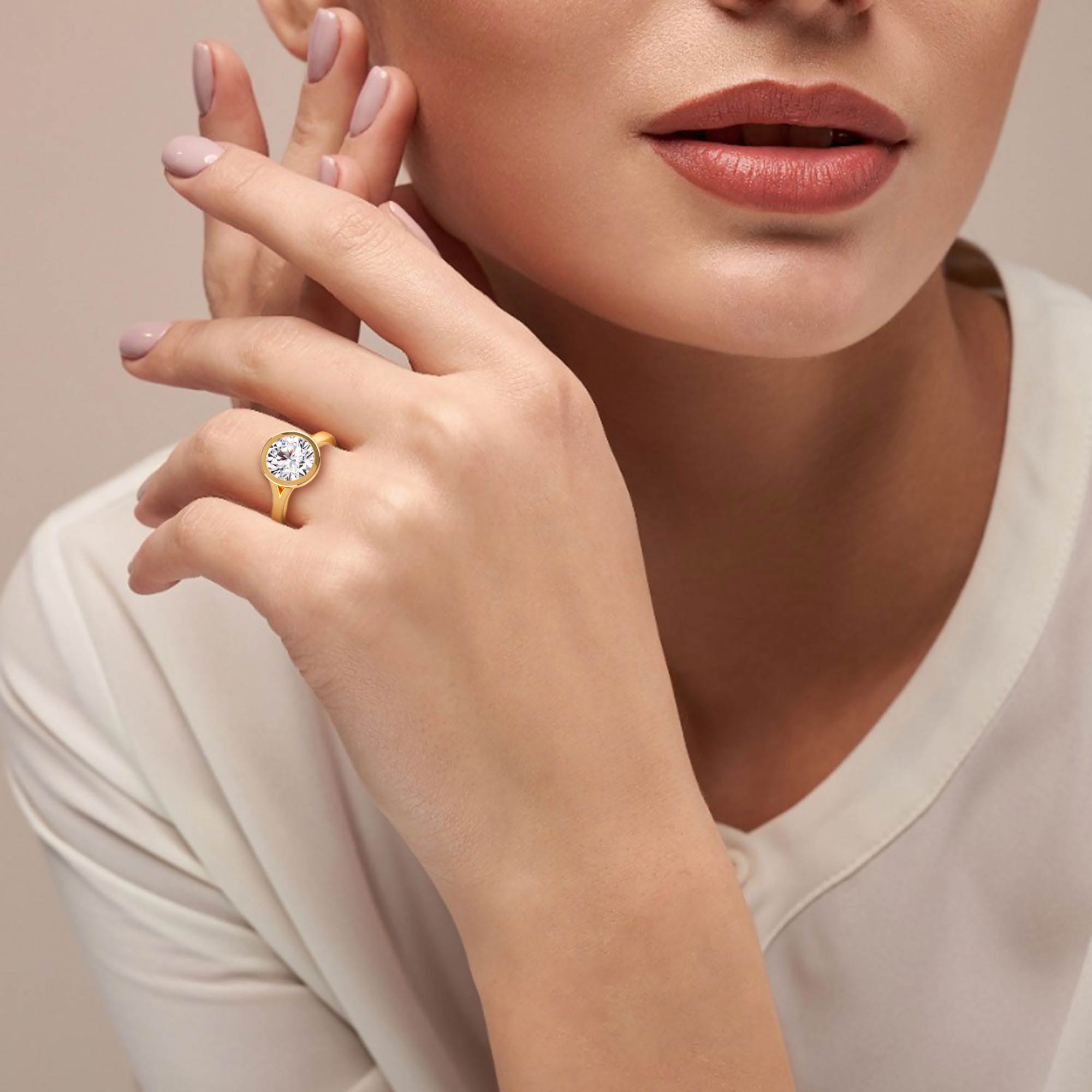
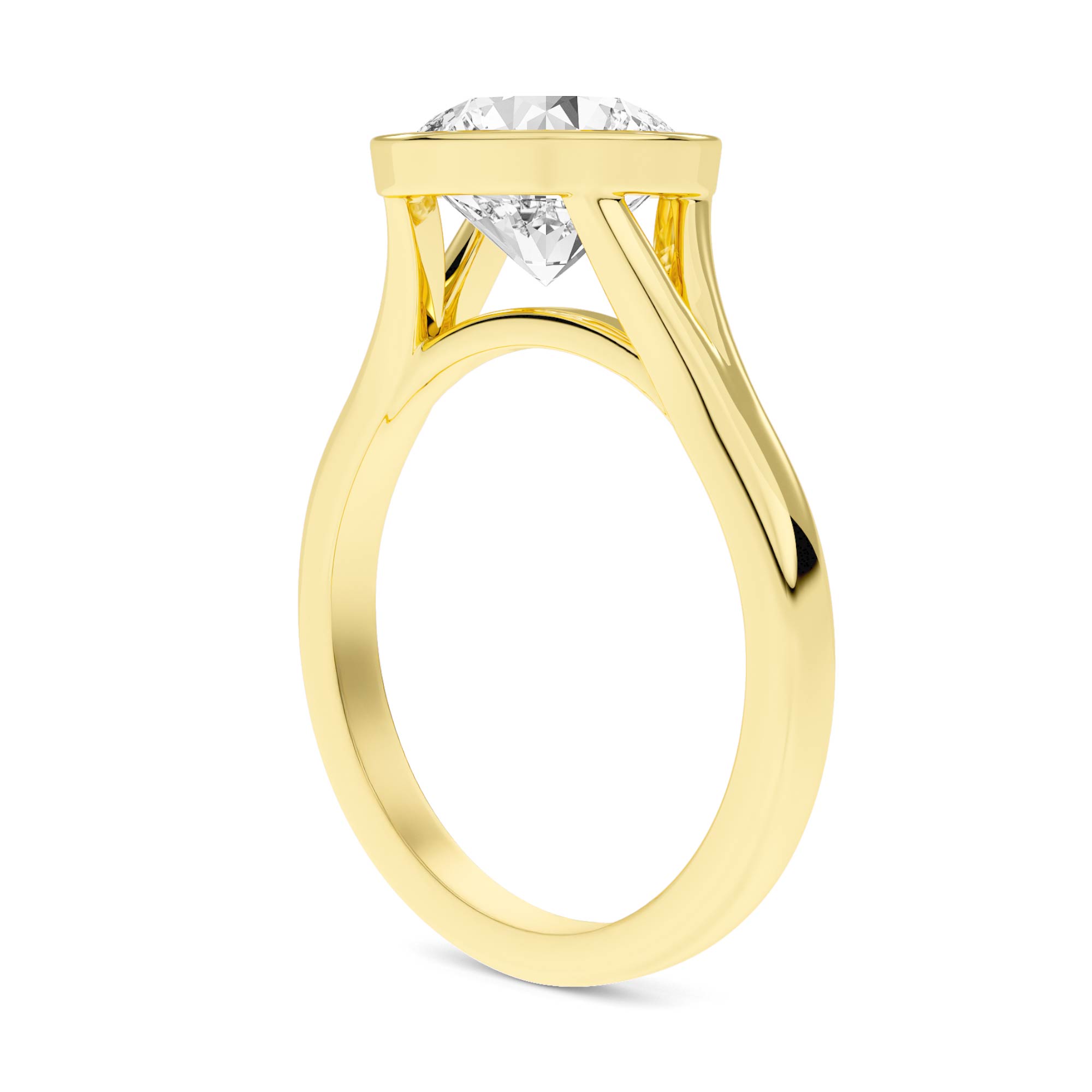
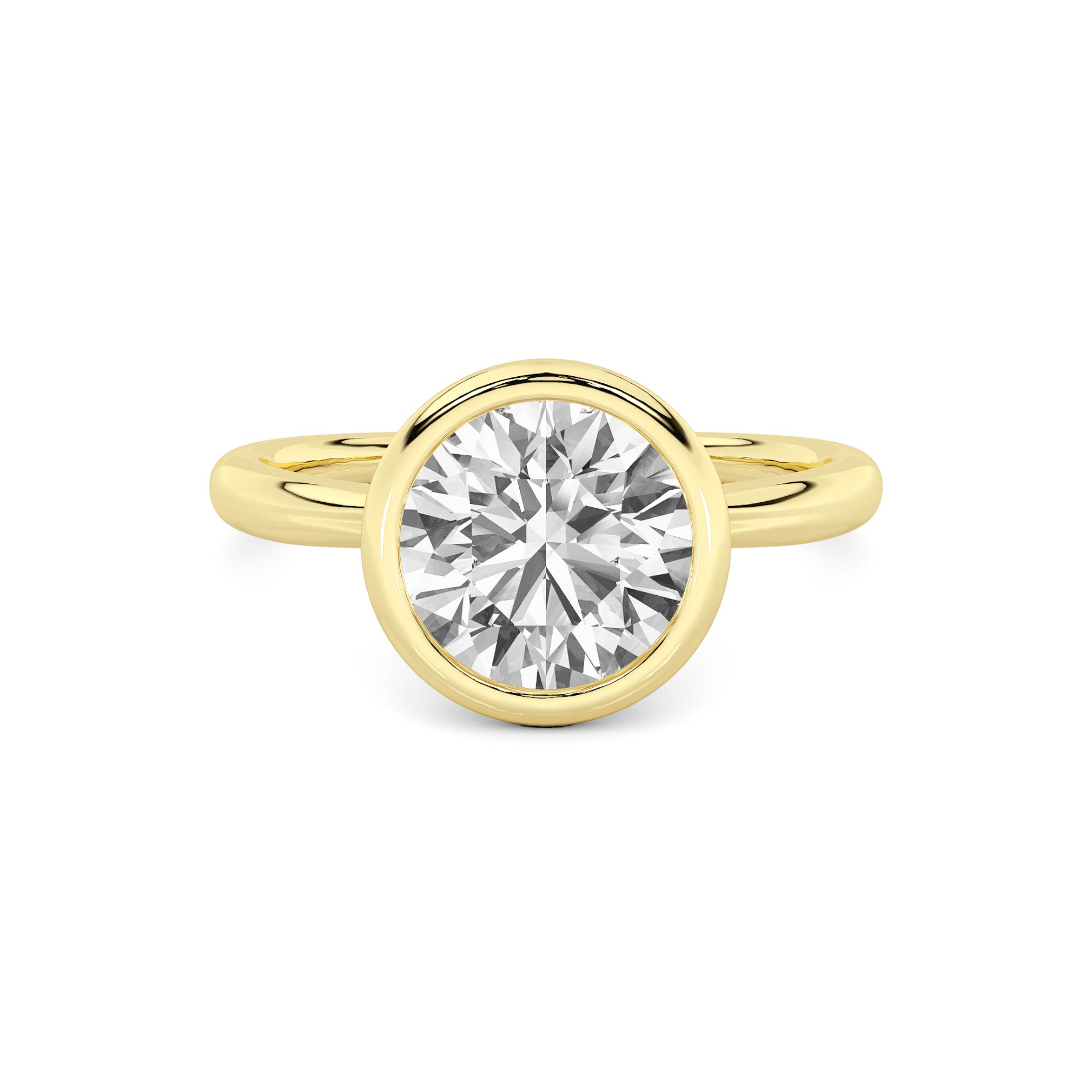
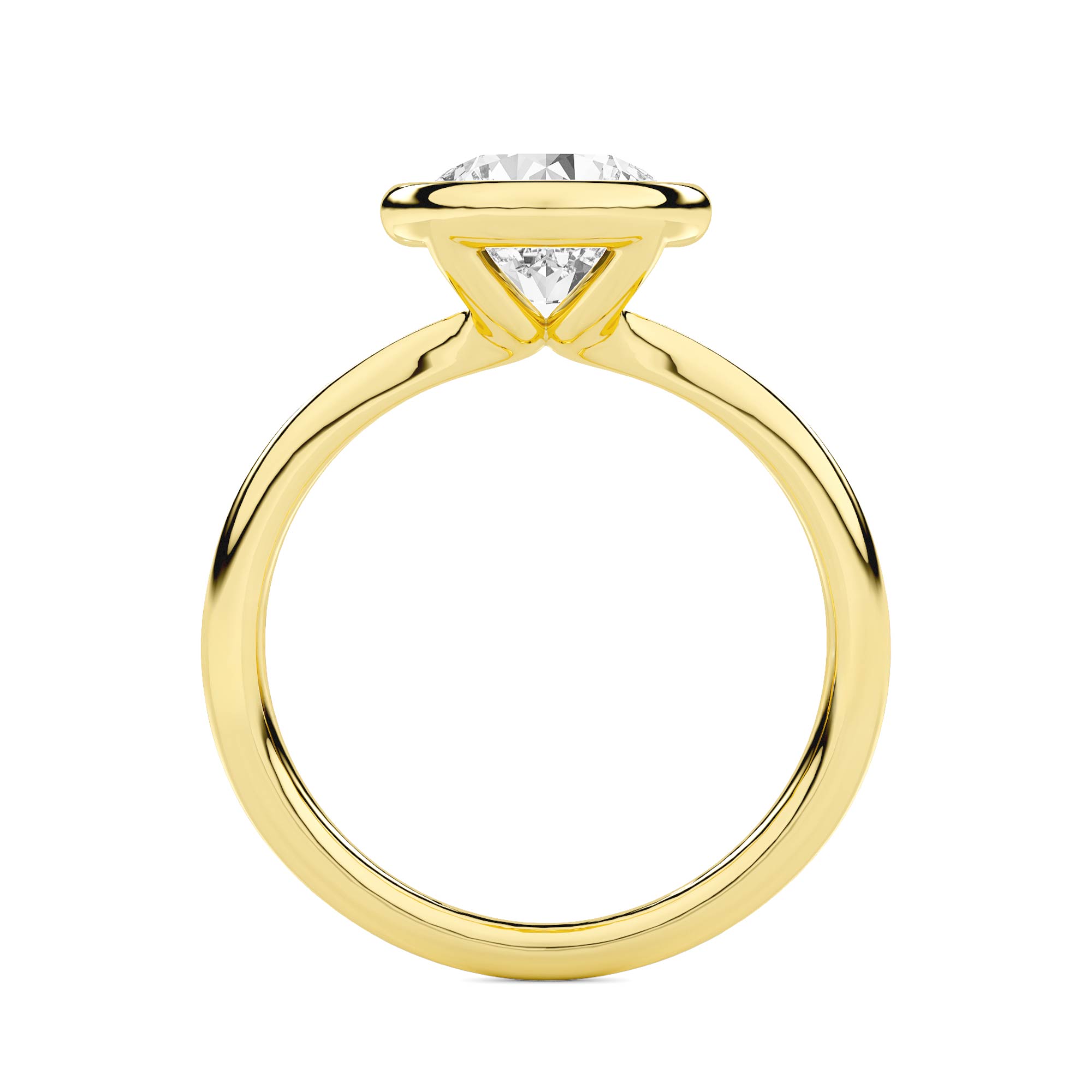
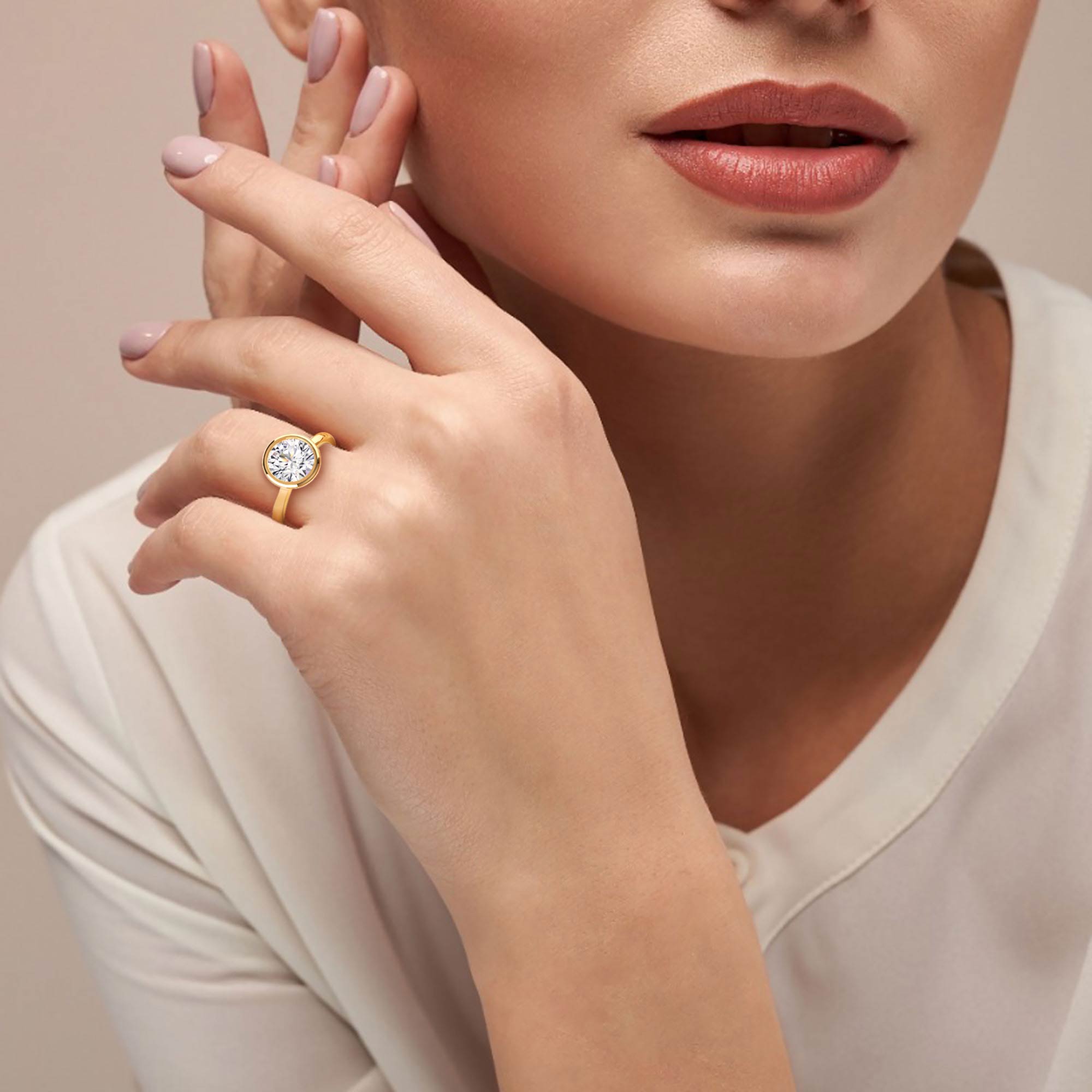
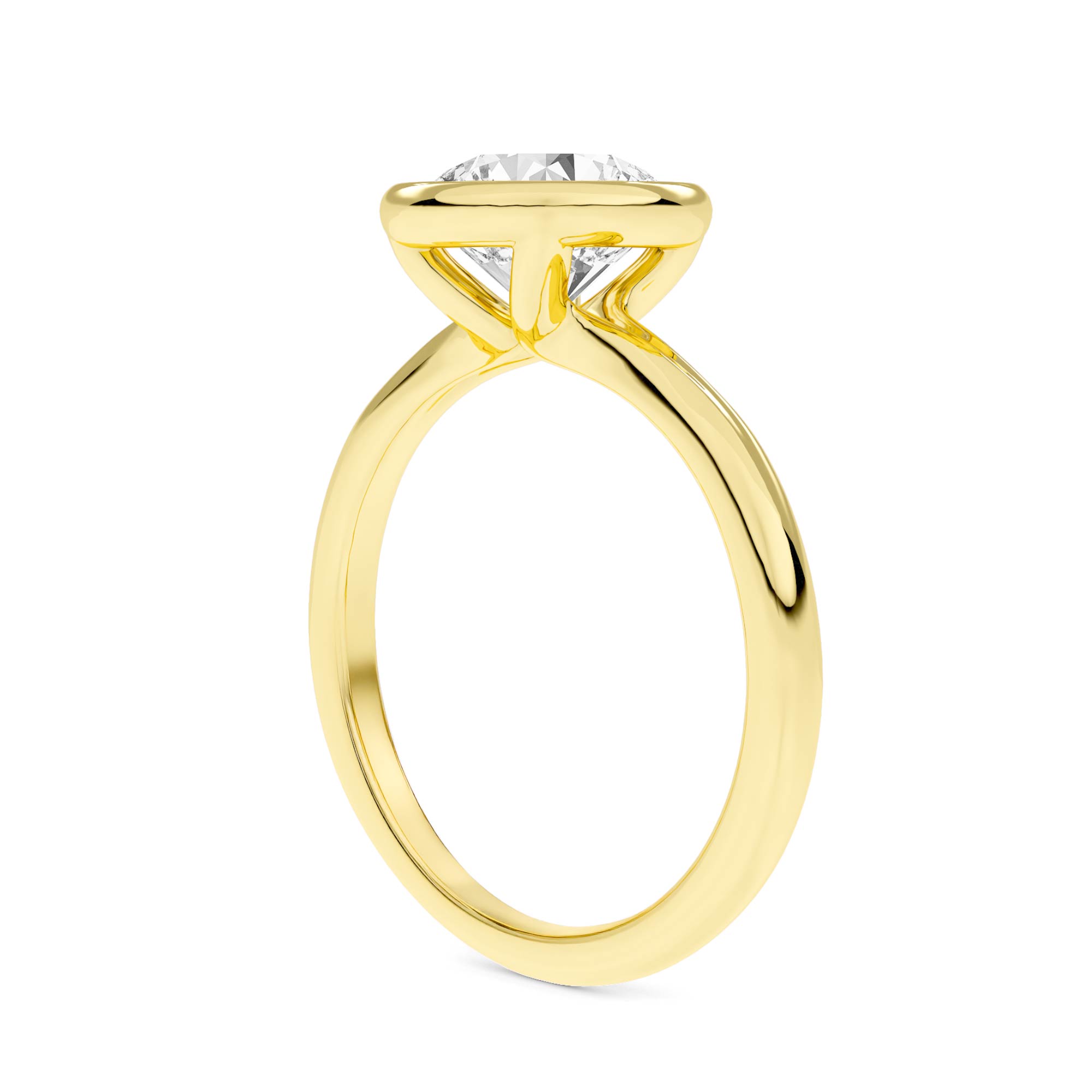
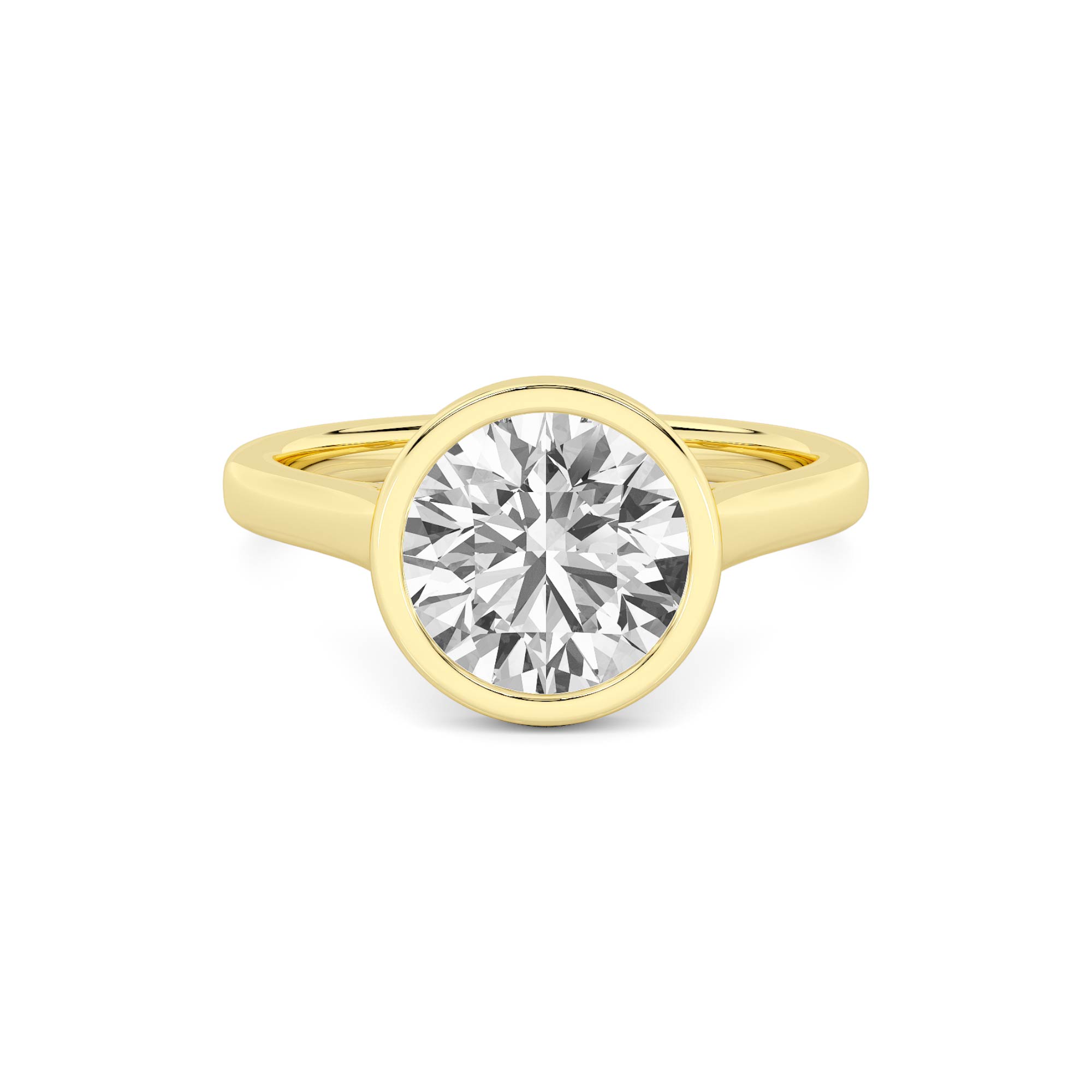
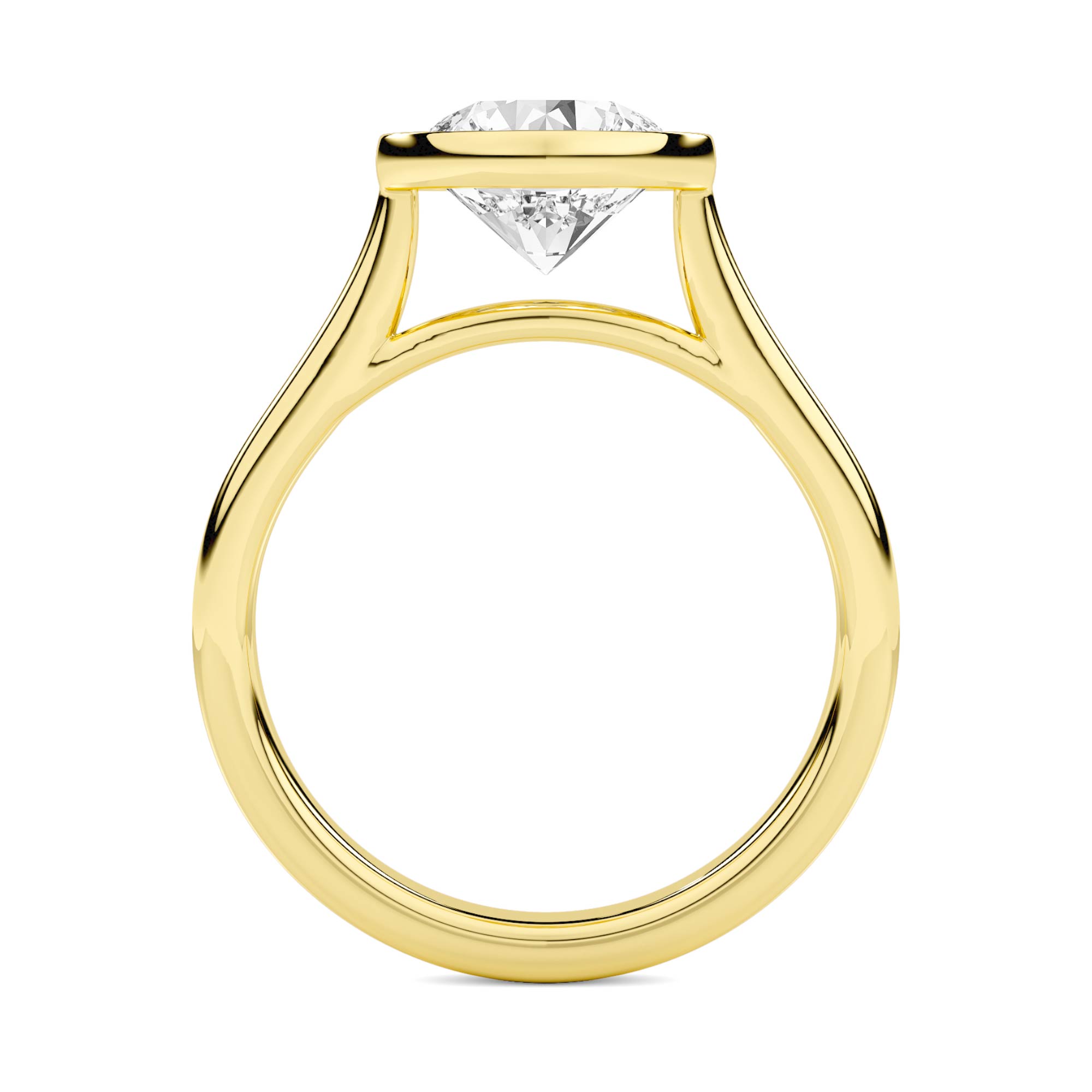
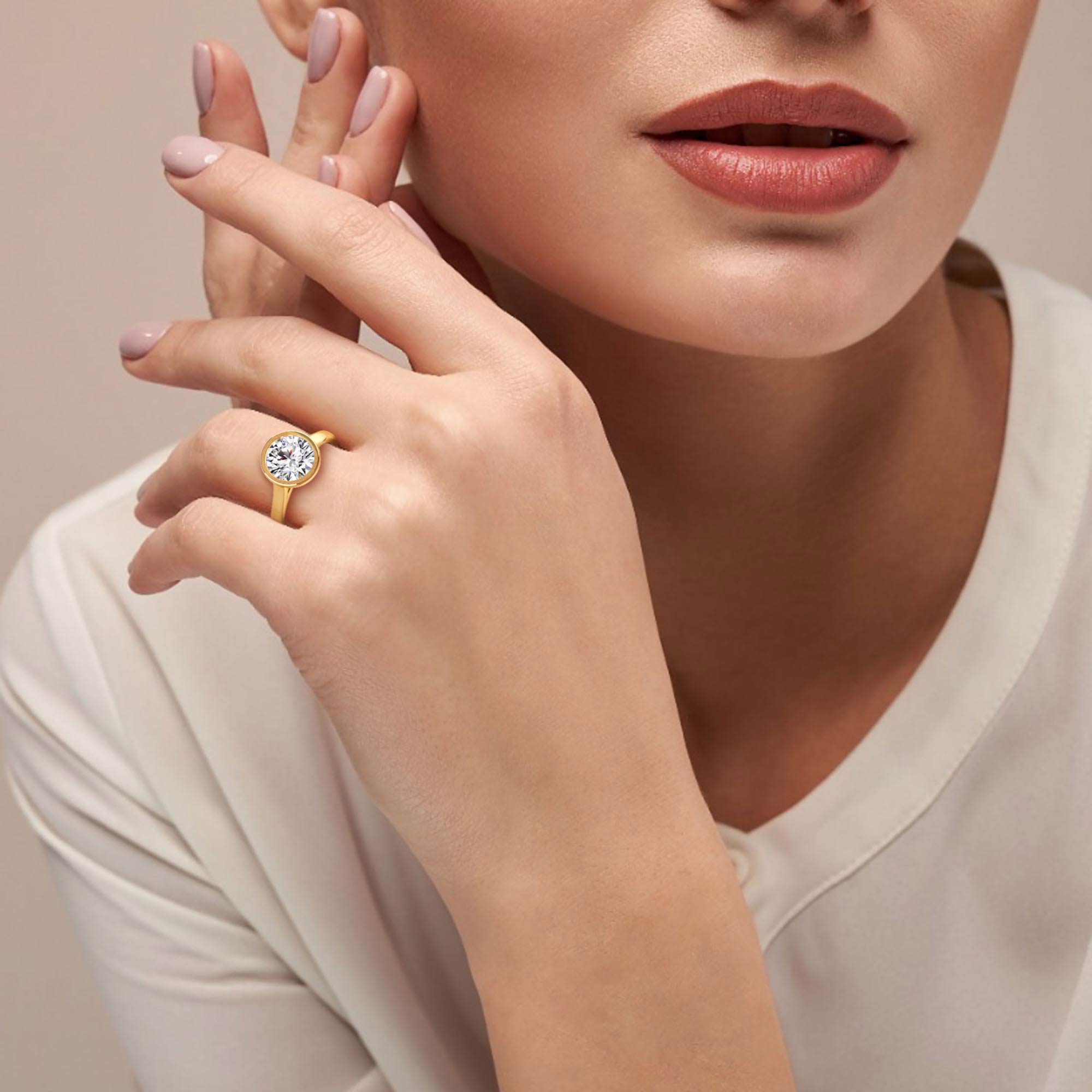
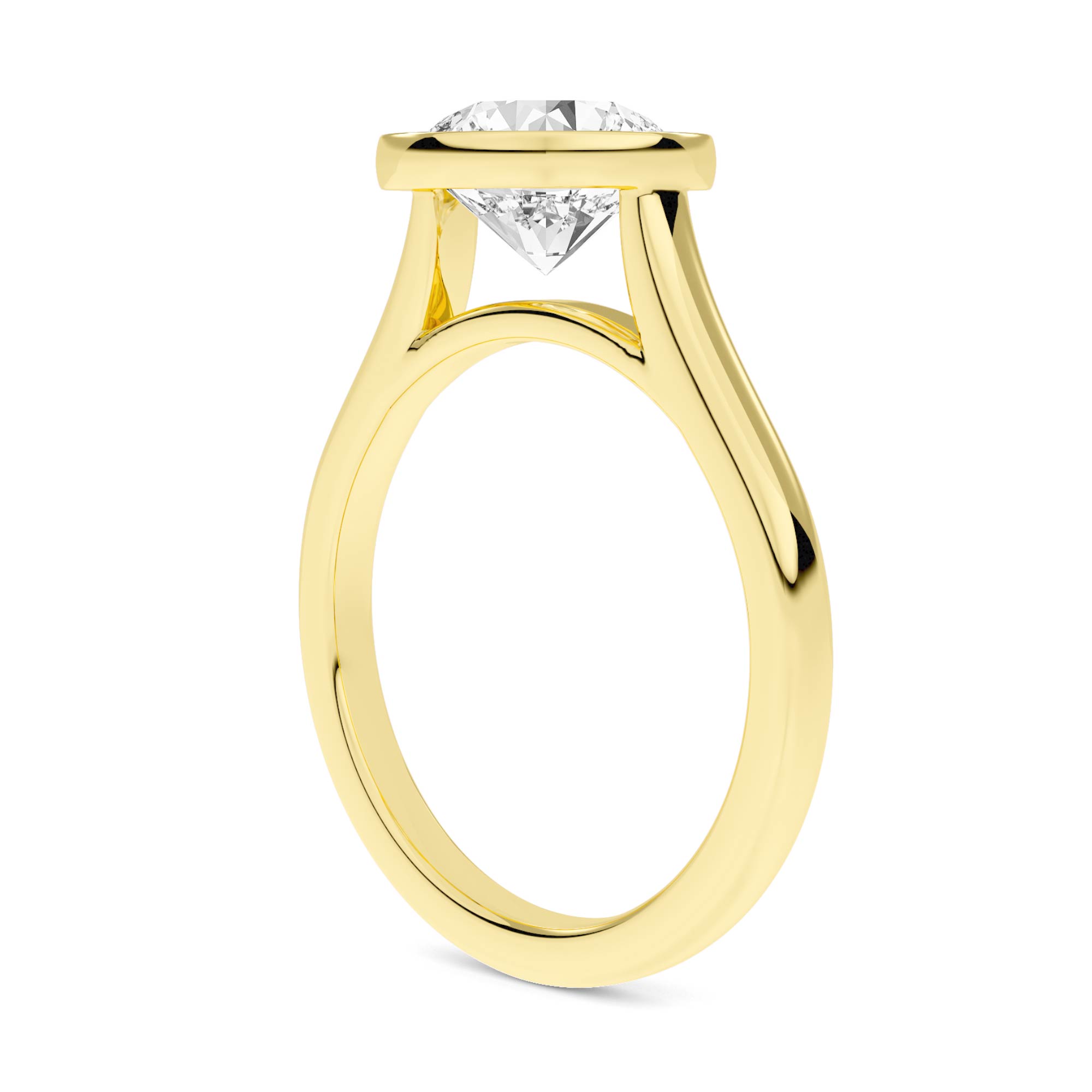
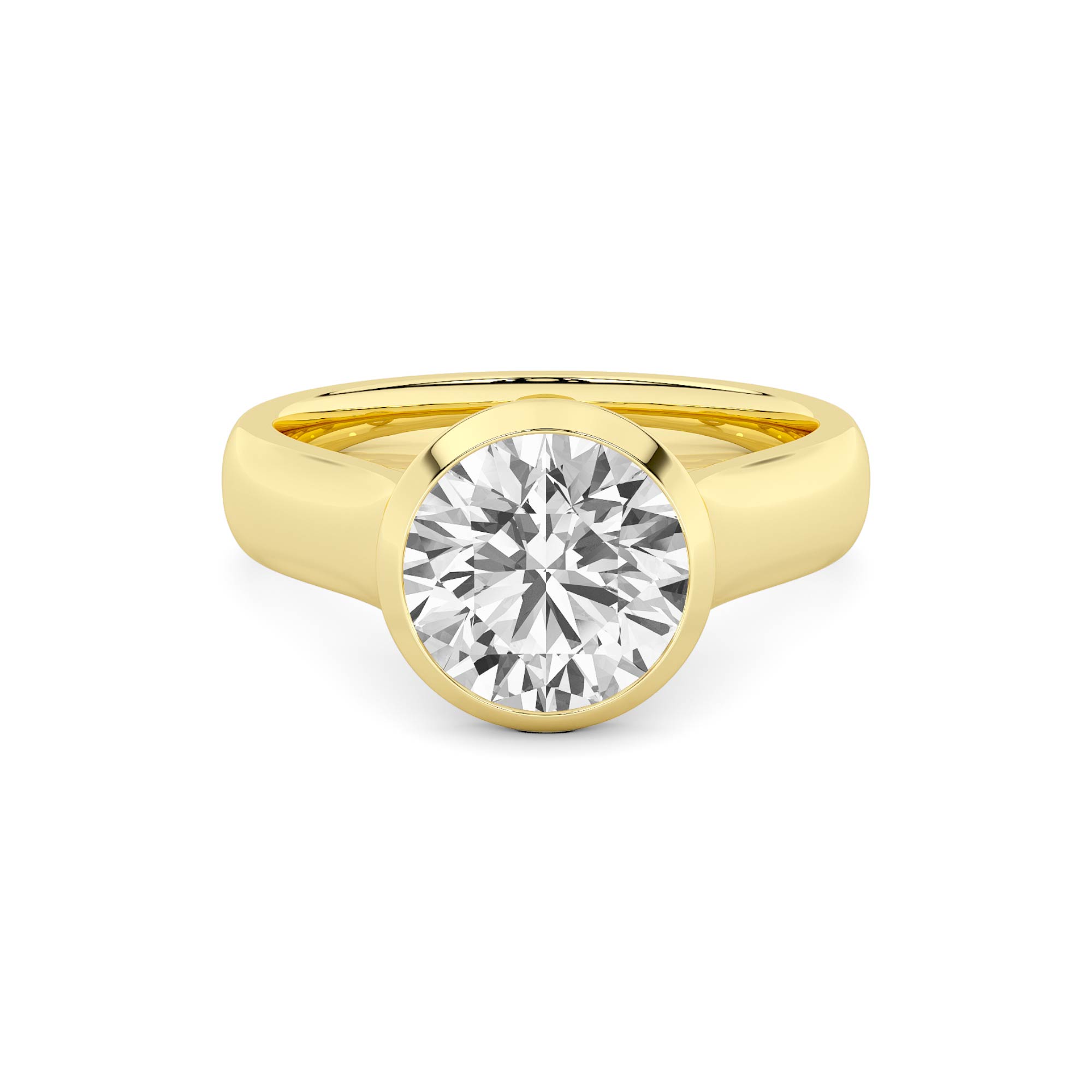
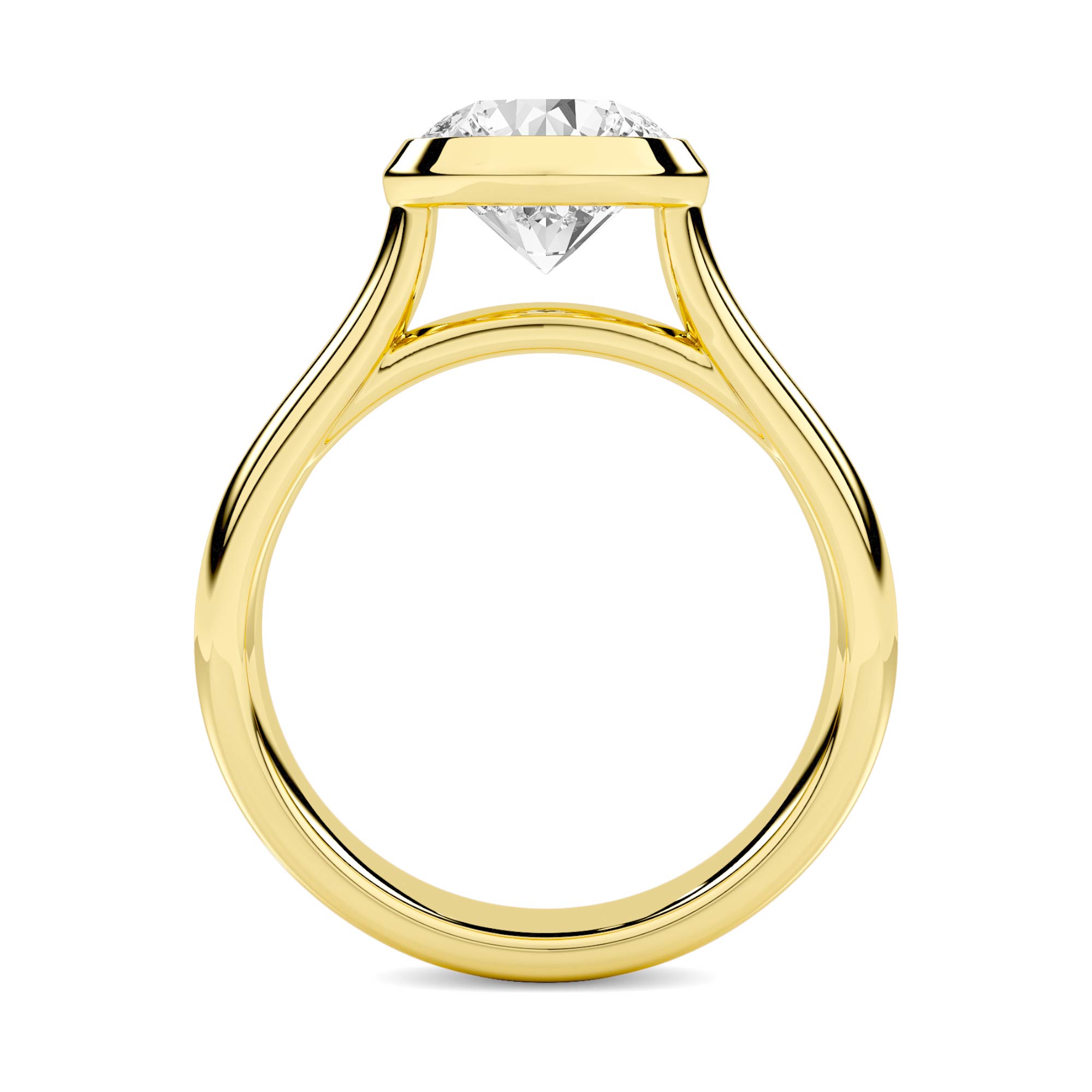
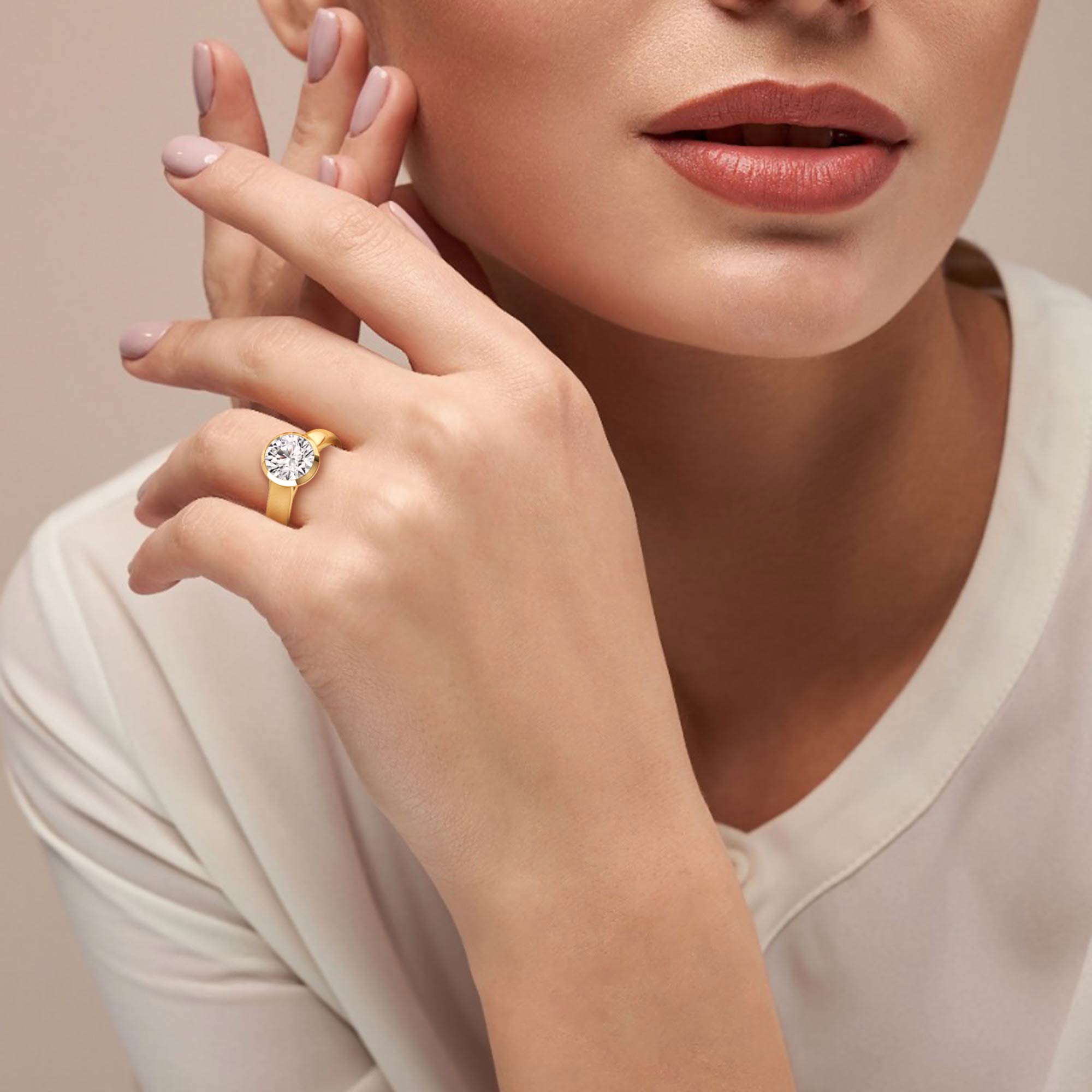
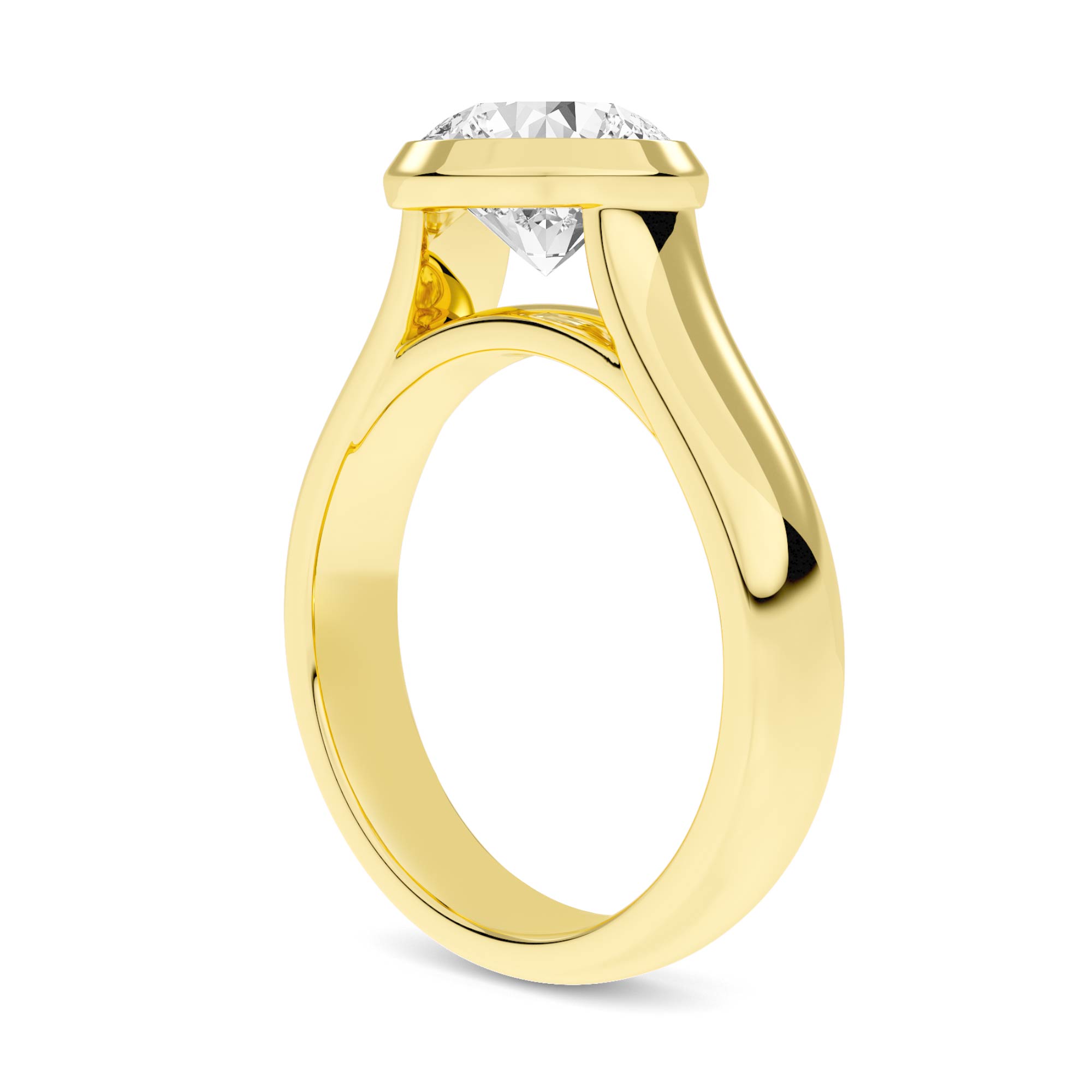
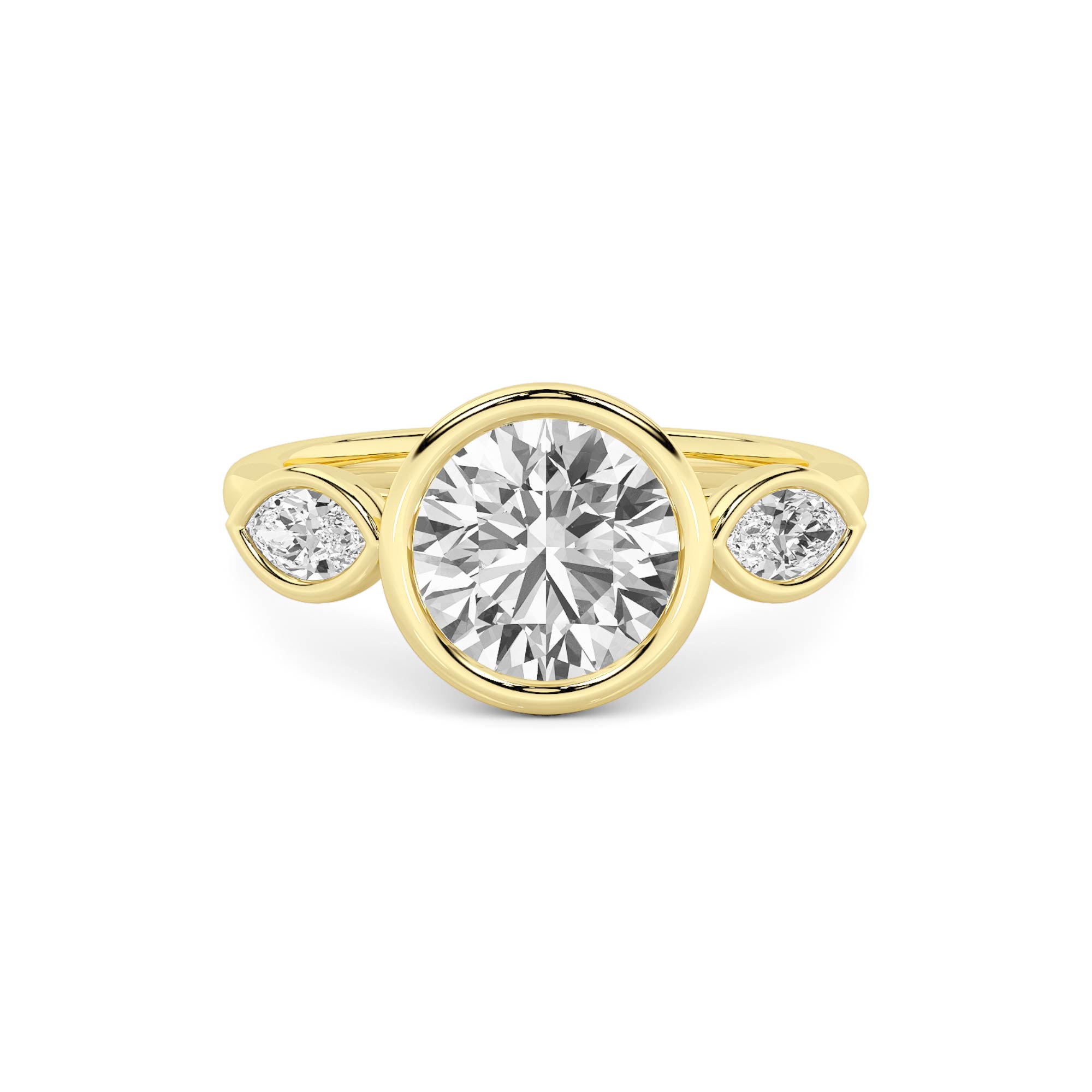
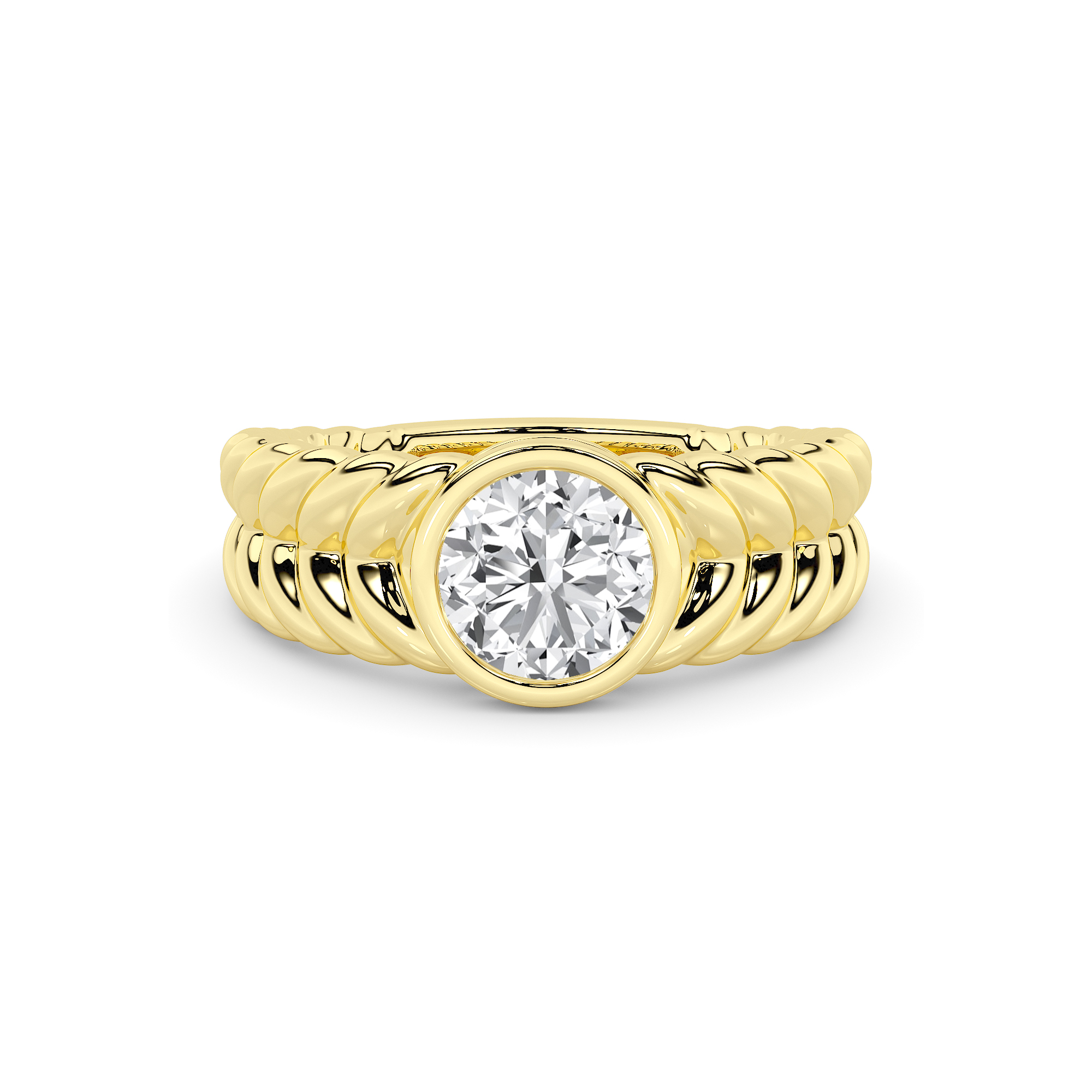
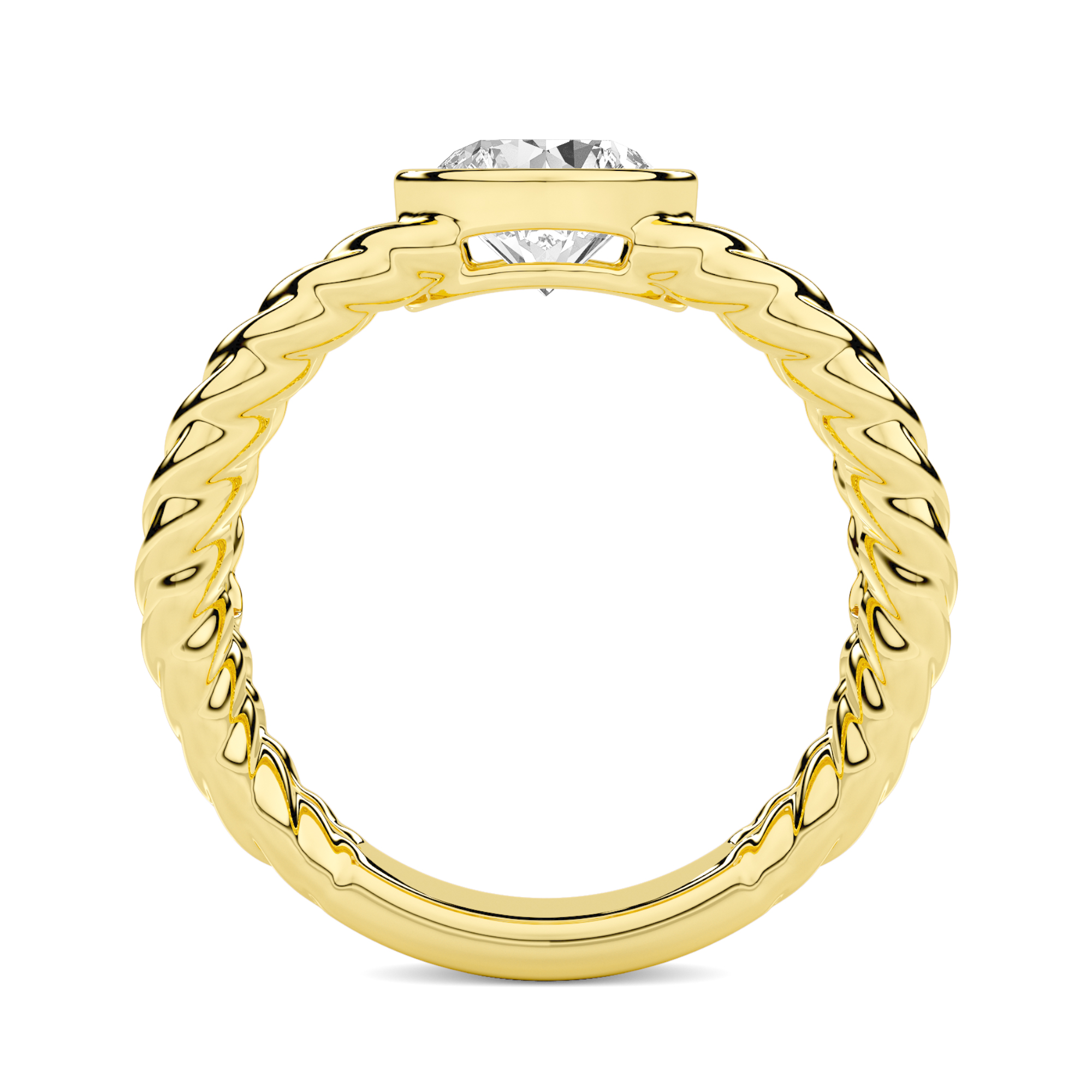
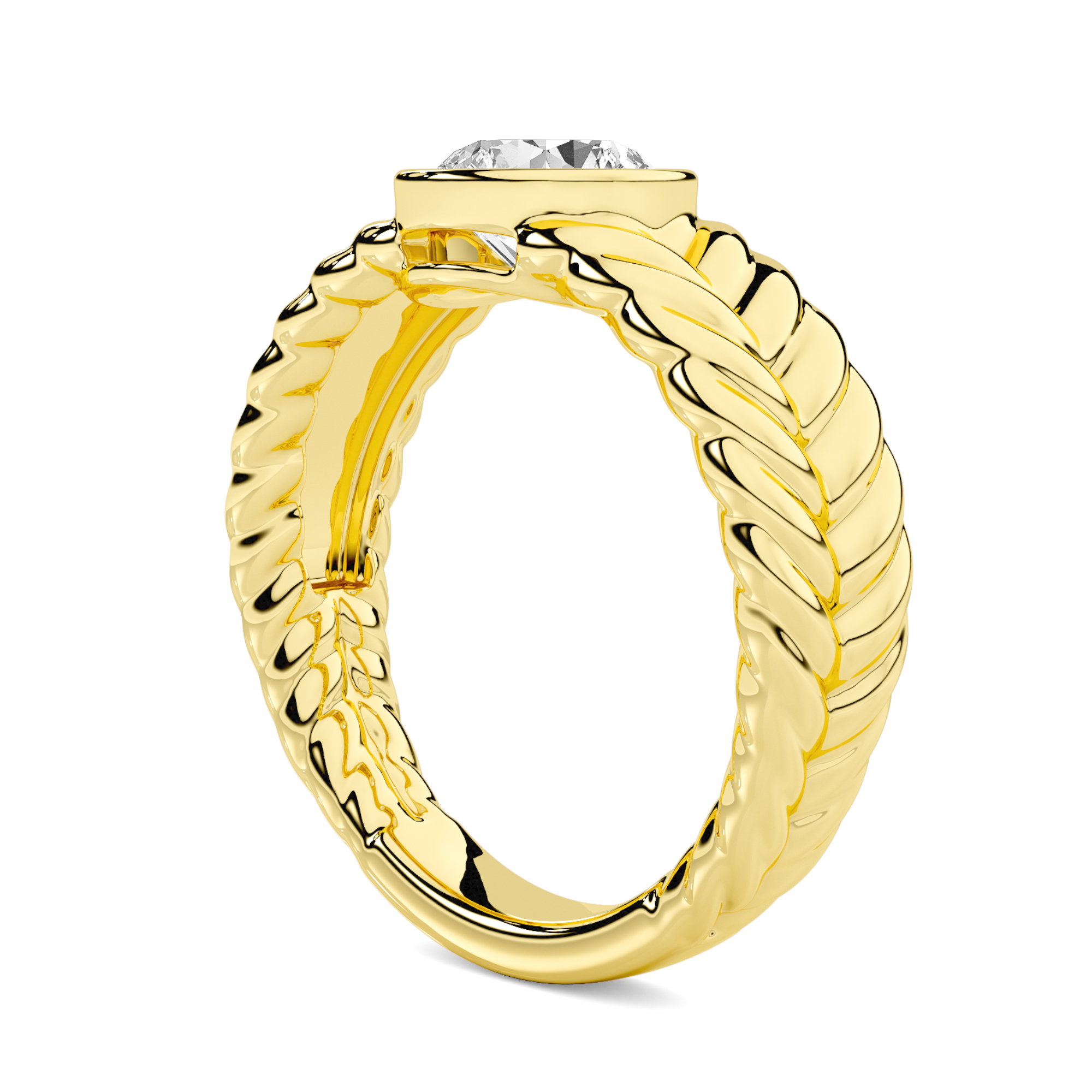
A bezel set engagement ring wraps each diamond in a smooth, custom-fitted metal rim instead of prongs — holding the stone securely at the girdle while creating a clean, low-profile silhouette that sits flush against the finger. The look is modern and architectural, with none of the sharp edges or raised profiles that prong settings carry, which makes the bezel one of the most practical and wearable engagement ring styles in fine jewelry. At Beverly's Jewelry, every bezel set diamond ring is hand-finished so the metal rim follows the exact contour of your chosen stone — available in full bezel for maximum protection and half bezel for added light exposure and sparkle. The collection is offered in yellow gold, white gold, rose gold, and platinum, across oval, round, emerald cut, marquise, pear, and cushion diamond shapes, with both GIA-certified natural and lab-grown diamond options available throughout.
Shape
Metal
Filters
All Filters
Shape
Metal
Sort By:
Showing 8 Results
Bria Bezel Prong Ring
$1,490
Bria Fancy Bezel Ring
$2,240
Bria Trillion Bezel Ring
$1,200
Bria Standard Bezel Ring
$900
Bria East West Bezel Ring
$1,050
Bria Wide Band Bezel Ring
$1,790
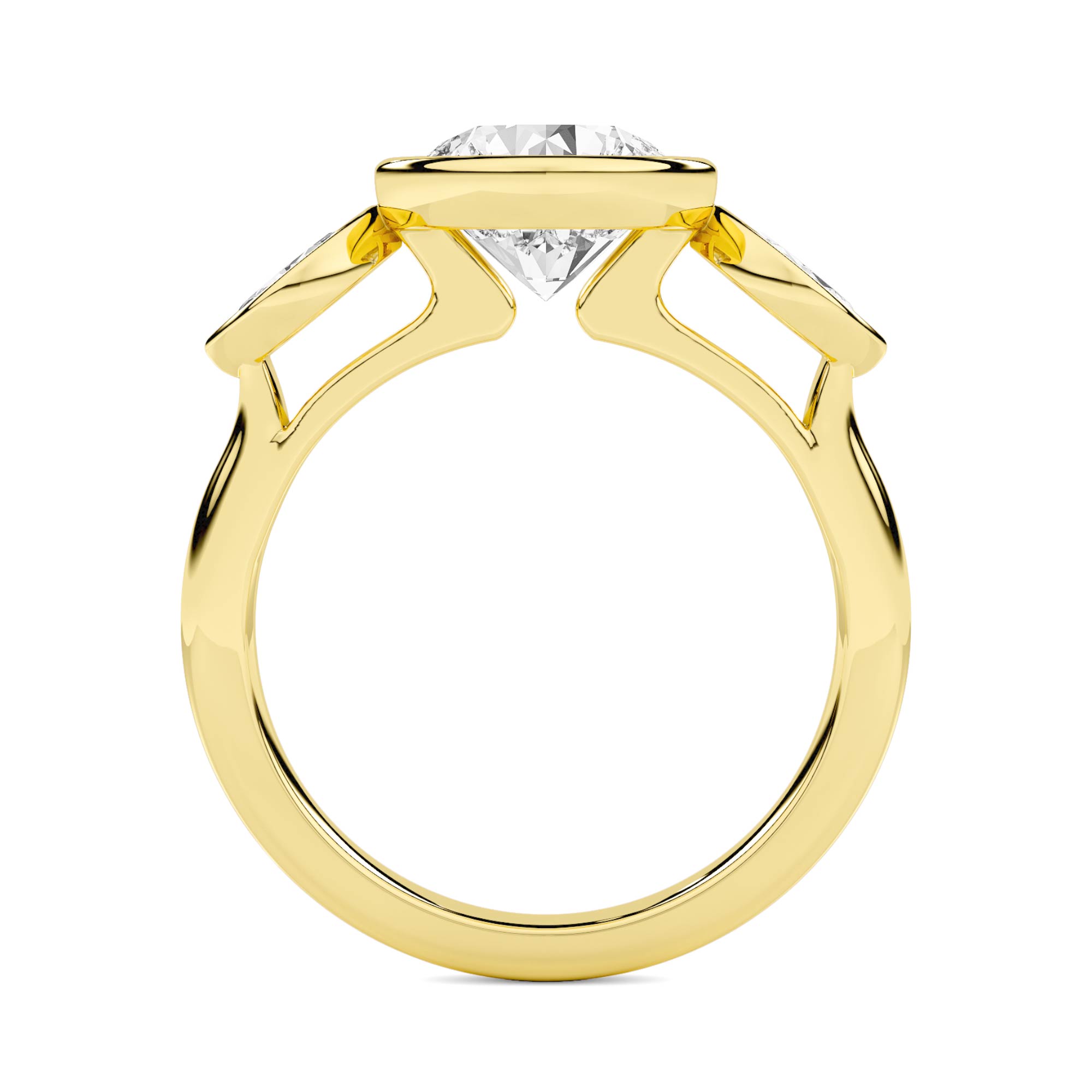
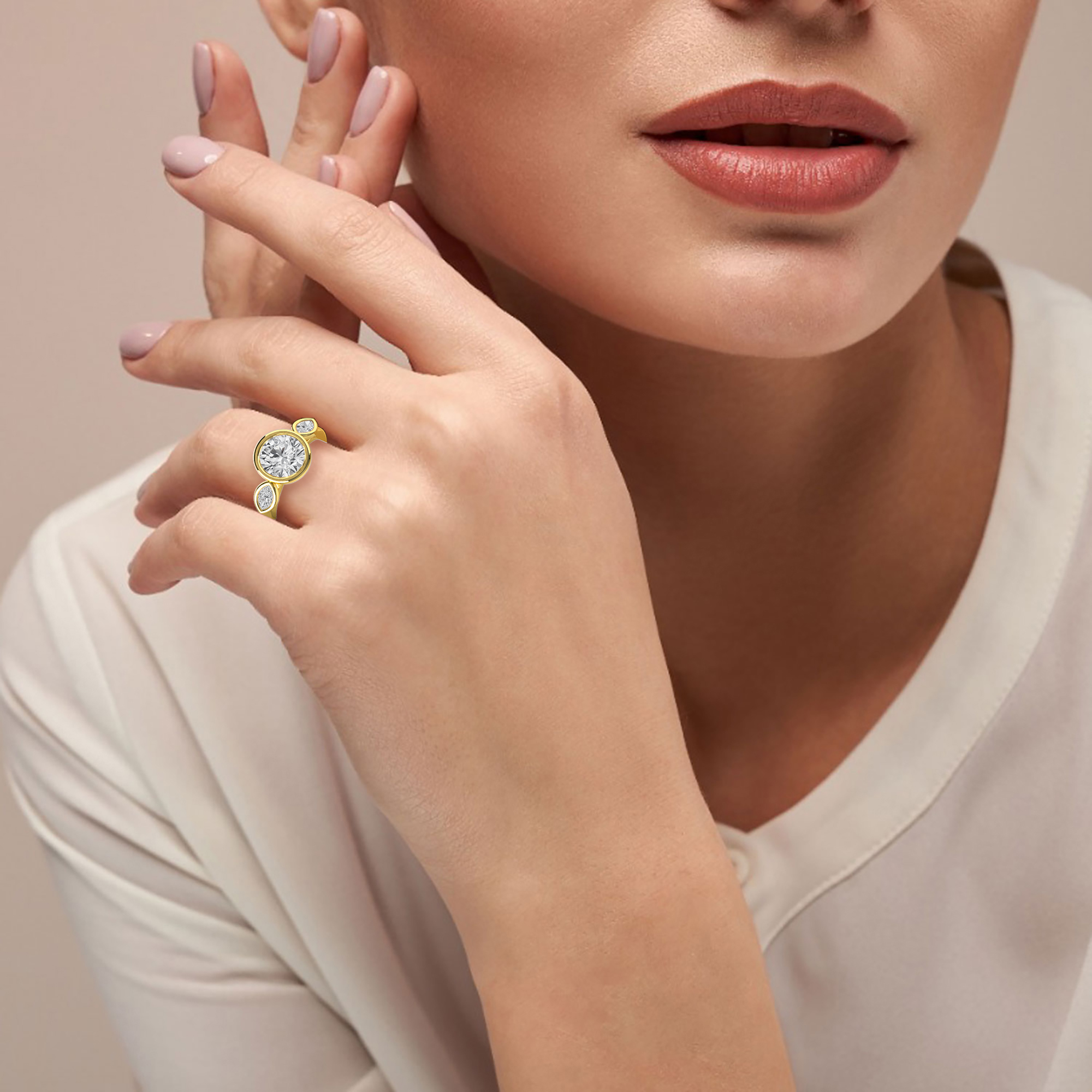
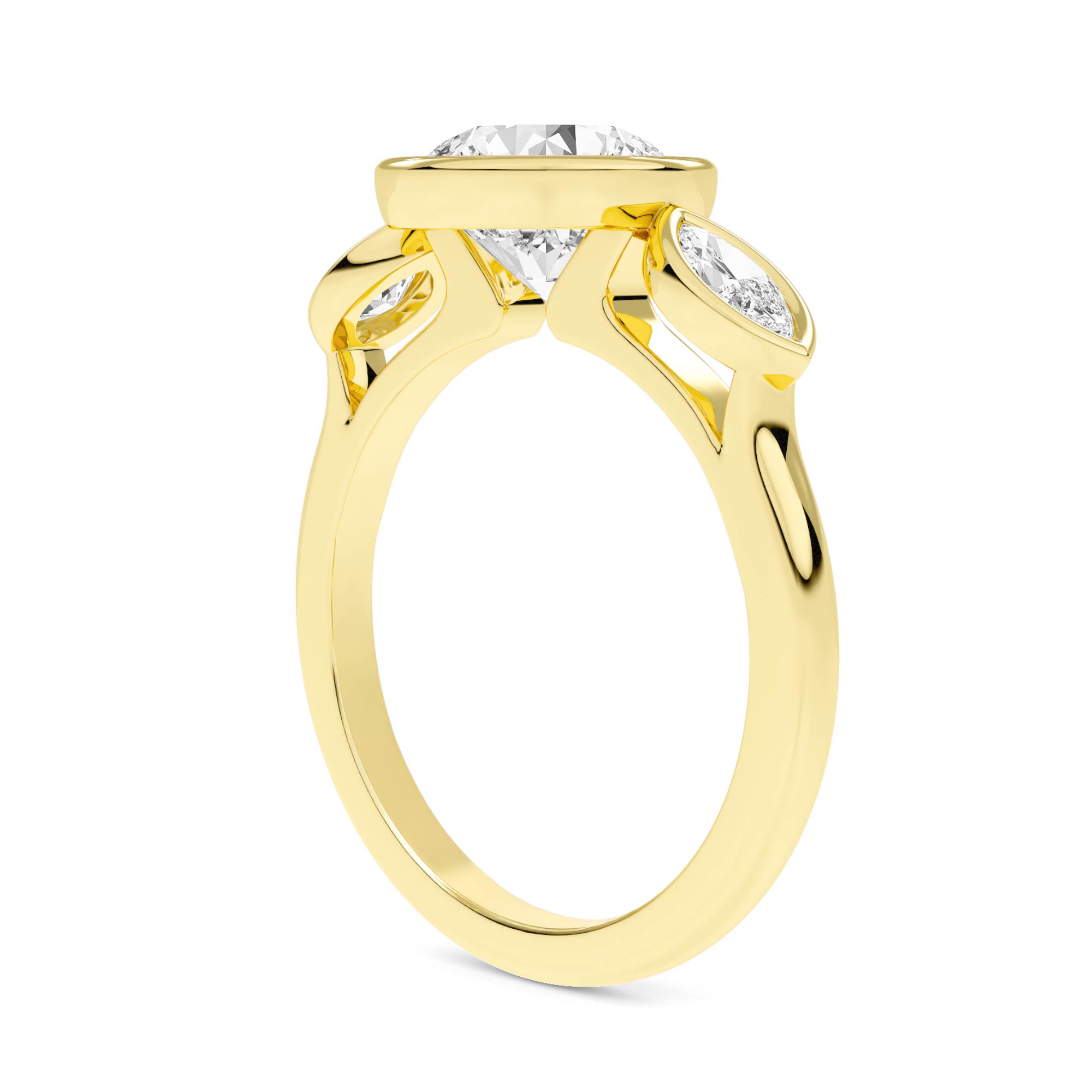
Bria Bold Three Stone Bezel Ring
$1,600
Elegant Rope Solitaire Diamond Ring
$1,490
Full Bezel vs. Half Bezel — Understanding the Difference
The most important variation within bezel set engagement rings is the choice between a full and a half bezel setting. A full bezel completely encloses the diamond with a continuous metal rim around the entire circumference of the stone. It offers the highest level of protection — the diamond's girdle is shielded on all sides — and creates the cleanest, most enclosed profile of any engagement ring setting. It's the right choice for buyers who prioritize security above all else, or who want the most streamlined possible look.
A half bezel, sometimes called a partial bezel, leaves the sides of the diamond open. The metal rim holds the stone at the top and bottom only, which allows more light to enter the diamond from the sides and increases overall brilliance. The open sides also give the ring a lighter, more open feel that sits closer to a solitaire aesthetic while retaining the bezel's prong-free security. For buyers who want the bezel's clean lines without losing sparkle, the half bezel is the natural middle ground. Ourengagement ring settings page shows both variations alongside Beverly's full range of setting styles.
Best Diamond Shapes for a Bezel Setting
The bezel setting works across nearly every diamond shape, but some combinations produce particularly strong results. Round brilliant diamonds in a full bezel setting create the most classic and symmetrical outcome — the circular rim follows the stone's geometry perfectly and the result is clean, proportional, and timeless. Oval diamonds are the most searched bezel combination right now, and for good reason — the elongated shape inside a fitted metal rim creates one of the most elegant and finger-flattering ring profiles available.
Emerald cut and cushion cut diamonds take on a more architectural quality inside a bezel — their straight or softly curved edges are emphasized by the metal rim in a way that prong settings cannot replicate. Marquise and pear shaped diamonds benefit from a bezel setting more than most other shapes, because the metal rim protects their pointed tips from the chipping and abrasion that exposed prongs cannot prevent. For buyers choosing between shapes, ouroval engagement rings andemerald cut engagement rings pages show how each cut performs specifically within a bezel setting.
Metal Choice and Everyday Wearability
The bezel setting is the most practical engagement ring style for daily wear — no prongs to snag fabric, no raised edges to catch on surfaces, and no risk of a prong bending away from the stone over time. This makes metal choice more important here than in other settings, because the rim itself does the structural work of holding the diamond. Platinum is the most durable option and the one most recommended for bezel settings — its density and hardness mean the rim holds its shape under pressure better than any gold alloy and never needs replating. White gold is the most popular choice for its clean, neutral look that keeps focus on the diamond. Yellow gold suits vintage-inspired bezel styles particularly well, and rose gold pairs naturally with the bezel's soft, continuous line. OurGold 101 guide covers karat differences, long-term care, and how each metal wears over time if you're still deciding between options.
Explore Related Pages
Faqs
A bezel set ring holds the diamond inside a custom metal rim wrapped around the stone's edge instead of prongs. The result is a sleek, low-profile setting that protects the diamond fully and sits flush against the finger for comfortable everyday wear.
Prongs lift the diamond higher and allow maximum light entry, prioritizing brilliance. A bezel wraps metal around the stone, sits lower on the finger, and protects the girdle on all sides. A half bezel offers a middle ground — prong-free security with more light exposure than a full bezel.
A full bezel encloses the diamond completely with a continuous metal rim for maximum protection and the cleanest profile. A half bezel leaves the sides open, allowing more light into the stone and giving the ring a lighter, more open look while retaining the bezel's prong-free hold.
Yes. The metal rim in a bezel setting holds the diamond at the girdle on all sides, with no individual prongs that can bend, catch, or lift away from the stone. It's widely considered the most secure engagement ring setting for active lifestyles and hands-on work.
Not significantly from above, but the metal rim around the stone can create a larger perceived outline compared to a prong-held stone of the same carat weight. A half bezel can also enhance brilliance from the sides, which adds to the overall visual presence of the stone.
Round and oval are the most popular. Emerald and cushion cuts gain a sharp architectural quality inside a bezel rim. Marquise and pear shapes benefit most — the metal rim protects their pointed tips from chipping, which exposed prongs cannot reliably prevent.
Yes — it's one of the best settings for daily wear. With no raised prongs to snag or bend, the bezel sits low on the finger and requires less maintenance than other settings. It's a practical choice for nurses, athletes, teachers, and anyone with active hands.
Platinum holds the bezel rim best over time due to its density and hardness. White gold is the most popular for its modern, clean look. Yellow gold suits vintage bezel styles, and rose gold pairs naturally with the setting's soft, continuous silhouette.
Yes, though the process requires more care than resizing a plain band. A jeweler adjusts the shank width while preserving the bezel's fit around the stone. Getting sized accurately before ordering is recommended — our ring size chart simplifies that step.
An east west bezel ring positions the diamond horizontally across the finger rather than vertically. The stone sits perpendicular to the band, which creates an elongated, contemporary look that's particularly striking with oval, emerald cut, and marquise shaped diamonds.




164.webp)
2675.webp)
163.webp)
3148.webp)