10/25/2026
Wedding Bands for Oval Engagement Rings: Which Styles Sit Flush?
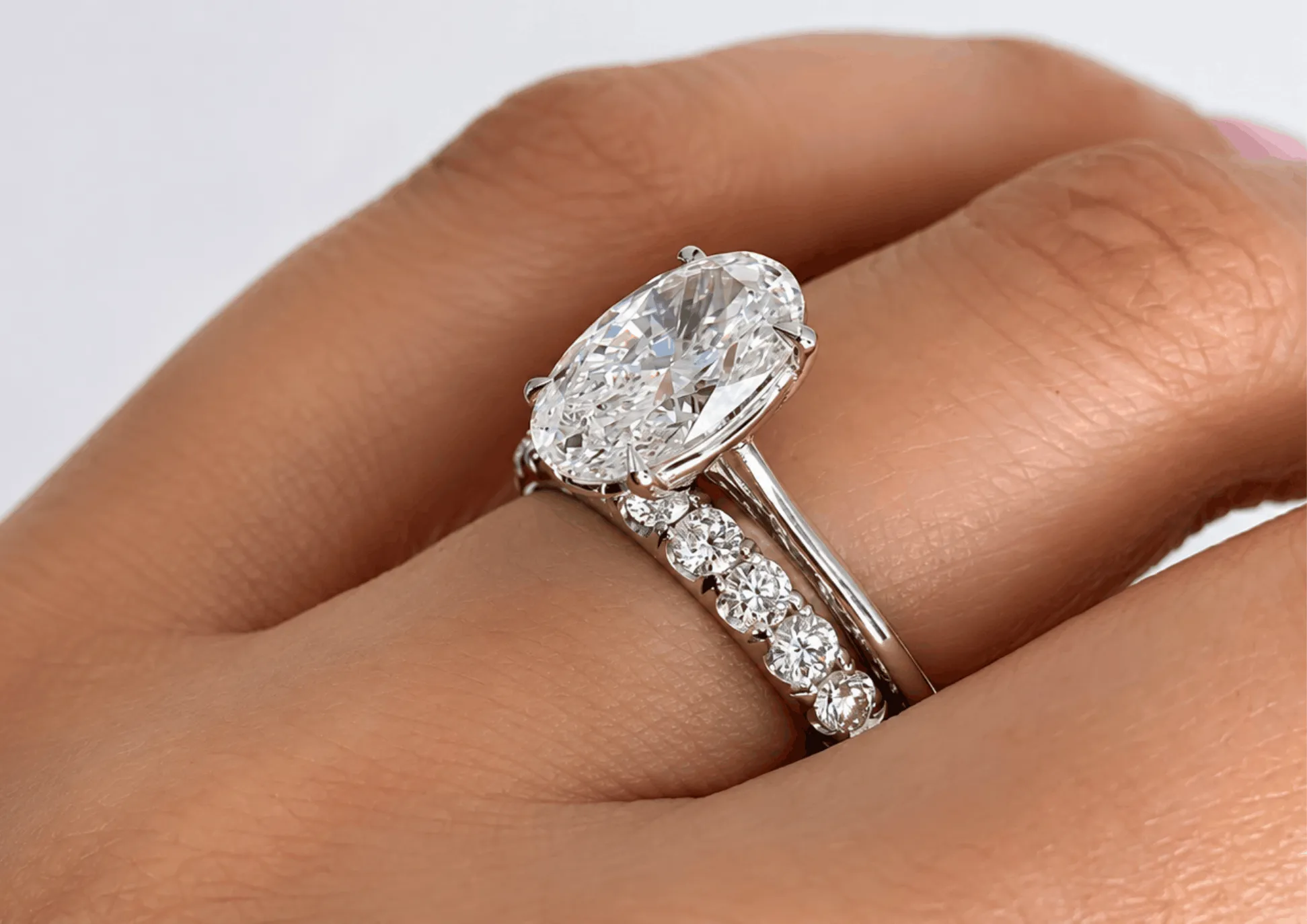
The wedding band that sits flush against an oval engagement ring is usually a curved (contoured) band or an open band with a notch. A straight band can work, but it often leaves a small gap beside the stone. Your setting height decides which style fits best. If you want to compare styles in person, our oval diamond wedding bands are made to sit close to an oval center.
Why Oval Rings Leave a Gap
An oval diamond runs lengthwise along your finger. The setting rises above the shank at both ends of the stone, and a flat band can't tuck under that curve. The result is a thin wedge of space between the two rings.
Plenty of people like that look, and it isn't a flaw. If you want the rings to touch with no space, you need a band shaped to follow the setting.
The Band Styles That Work With an Oval
Curved (contoured) Band: The metal arcs around the oval so the two rings nestle together. This is the most common choice for a flush fit, especially with a low-set stone.
Open (notched) Band: A small opening in the center makes room for the base of the setting. It suits settings with extra metal below the stone, such as a basket or a hidden halo.
Straight Band: Clean and simple. It sits flush when the oval is set high, and it works well if you like the look of a small gap or plan to wear the bands slightly apart.
Petite Stackable Band: A slim band such as our petite diamond fashion band adds sparkle without crowding the oval. It also leaves room for more rings later.
Check Your Setting Height First
Hold your engagement ring at eye level from the side. If the bottom of the stone sits well above the shank, a straight band usually works. If the stone sits low or the setting bulges beneath it, go with a curve or notch.
Side profile matters as much as the top view. Bring your engagement ring, or a clear photo of its side profile, when you shop. Our guide on why setting height and style matter explains how this affects fit and everyday comfort.
Match the Setting Style
Solitaire: Most bands fit, so choose by look.
Halo: The halo adds width and metal at the sides, so a curved or notched band tends to fit better. See halo engagement rings for how different halos sit.
East-west ovals: A stone set sideways changes the contour, so try the bands on together. Our post on east-west diamond rings covers this trend.
Metal and Width
Matching metals keep the stack consistent and make the rings wear evenly. Mixing metals, like a yellow gold band with a platinum engagement ring, is a popular option too. If you're comparing the two whites, our breakdown of white gold vs. platinum covers durability and upkeep, and platinum wedding bands are a strong fit for everyday wear.
For width, aim for a band that is about the same as the engagement ring's shank or slightly narrower. A very wide band can compete with the oval and make the stone look shorter. A band that matches the shank usually looks balanced.
One more thing to know: a band with diamonds all the way around can rub against a prominent setting. If you wear both rings daily, ask your jeweler whether a plain section next to the engagement ring is a smarter choice.
Tips From a St. Thomas Jeweler
At Beverly's in Charlotte Amalie, we fit bands to oval engagement rings every day. We often put the rings side by side and check them from three angles before a customer decides. If you're visiting the island, stop by our St. Thomas store, and we'll try several styles on your ring.
Before you buy, measure your finger with our ring size chart. Ask for GIA-certified diamonds if your band has stones. If nothing fits your ring exactly, our custom jewelry team can shape a band to follow it. For help planning your full set, see our guide to matching bridal jewelry.