10/06/2026
Princess Cut vs. Round Cut Diamonds: Which Is Right for an Engagement Ring?
Choosing a diamond shape is one of the first decisions to make when shopping for an engagement ring. Two popular options are the princess cut and round diamond. While both can create a bright and attractive center stone, they have noticeably different appearances.
Understanding the differences between these two shapes can make it easier to choose a diamond that fits your style, budget, and preferred ring design.
What Is a Princess Cut Diamond?
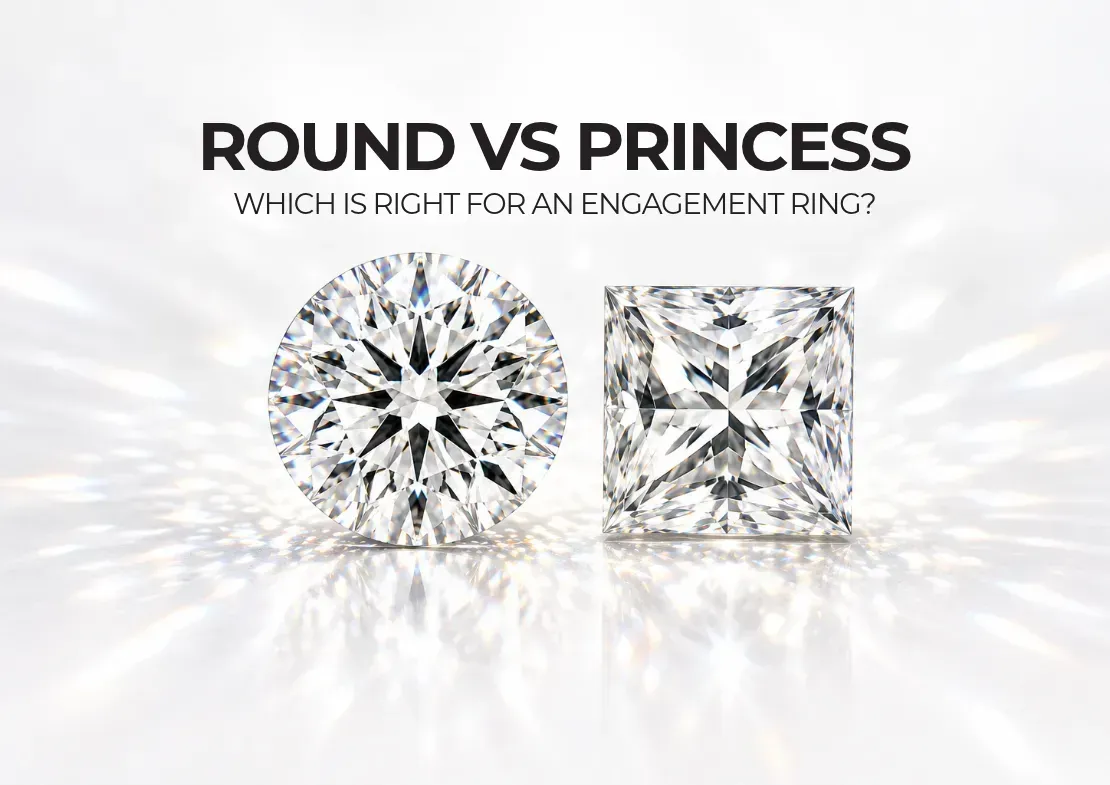
A princess cut is a square or slightly rectangular diamond with pointed corners and a brilliant-style faceting pattern. Its clean lines give it a modern appearance, while its faceting can produce plenty of light and sparkle.
The shape also works well with a variety of engagement ring settings, from simple solitaire designs to styles with side stones or surrounding diamonds.
If you are considering this shape for your engagement ring, you can view Beverly's Jewelry's princess-cut styles to see the available designs.
What Is a Round Diamond?
A round diamond has a circular outline and is known for its classic appearance and strong light performance. Its symmetrical shape works with many different engagement ring settings and metal choices.
Round diamond styles are often chosen by shoppers who want a traditional engagement ring appearance that can work across different styles.
Princess Cut vs. Round: What's the Difference?
The biggest difference is the overall appearance.
A princess cut has straight sides and pointed corners, giving the ring a more geometric look. A round diamond has a curved outline and a more traditional appearance.
The two shapes can also interact differently with a ring setting. A princess cut can create clean, defined lines, while a round center diamond can give a softer visual effect.
Neither shape is automatically better. The right choice depends on the look you want and how the diamond works with the rest of the ring.
Which Shape Has More Sparkle?
Both shapes can have strong sparkle when they are well cut, but their faceting patterns are different.
Round diamonds are specifically designed for strong light return and are widely recognized for their brilliance. Princess cuts can also produce significant sparkle, particularly when the diamond has good cut quality.
When comparing diamonds, don't judge sparkle from shape alone. The individual diamond's cut quality, proportions, clarity, and overall finish can affect its appearance.
Which Shape Looks Larger?
Diamond size should be judged by measurements rather than carat weight alone.
A princess cut's square outline can create a distinctive presence on the finger, while a round diamond's circular shape gives it a different visual footprint. Two diamonds with the same carat weight may not look identical in size because their dimensions and proportions differ.
If visual coverage is important to you, compare the actual measurements of individual diamonds rather than relying only on carat weight.
Which Shape Is Better for Different Styles?
A princess cut may appeal to someone who prefers:
Clean, geometric lines
A modern-looking engagement ring
A square or rectangular center stone
A distinctive alternative to a round diamond
A round diamond may be a better fit for someone who prefers:
A traditional diamond appearance
A circular center stone
A versatile shape that works with many settings
A classic bridal style
Your choice should also consider the setting, metal, side stones, and how the ring will look with a wedding band.
How Should You Choose Between Them?
Start by deciding which overall appearance you prefer. Then compare individual diamonds based on the 4Cs: cut, color, clarity, and carat weight.
It is also helpful to compare diamonds within a similar budget. This lets you see how different shapes affect size, appearance, and the overall ring design.
If you're leaning toward a princess cut, compare different settings and diamond specifications rather than choosing based on shape alone.
Final Thoughts
Princess and round diamonds offer two very different approaches to an engagement ring. A princess cut provides a crisp, geometric appearance, while a round diamond offers a traditional circular shape and strong brilliance.
The best choice is the one that matches your personal style, preferred ring setting, and budget. Comparing the shape, proportions, cut quality, and overall design can help you make a more confident decision.