02/01/2025
Lionfish in the Caribbean
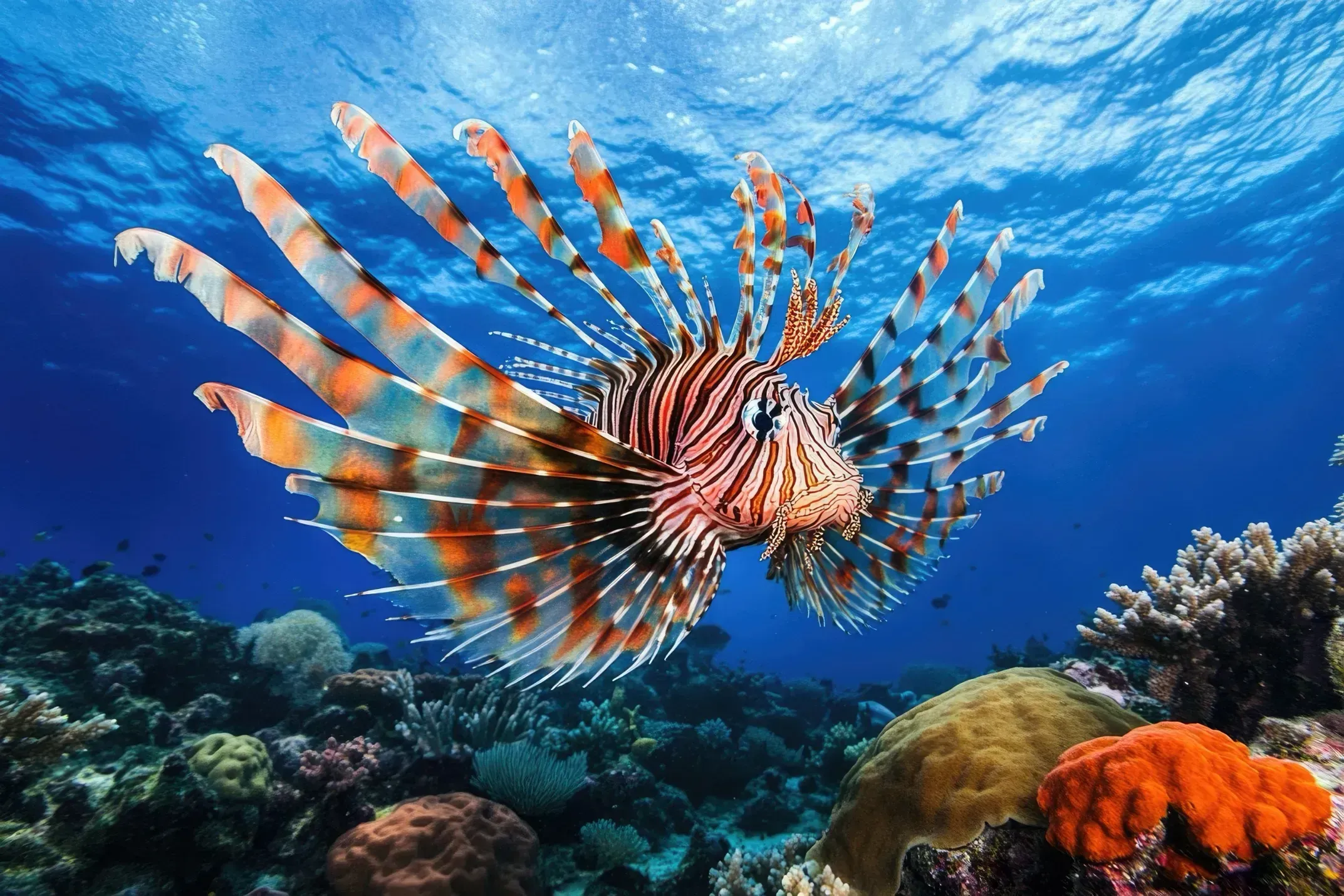
With their striking stripes and flowing fins, lionfish may look mesmerizing in the Caribbean Sea, but beneath their beauty lies a serious environmental threat. These invasive species, originally from the Indo-Pacific, have rapidly spread across the Atlantic Ocean and Caribbean, including St. Thomas and St. John, disrupting fragile coral reef ecosystems and endangering native marine life.
Let’s explore the impact of lionfish in the Caribbean and how conservationists, divers, and even chefs are working together to protect our reefs.
The Invasive Lionfish: How Did They Get Here?
Lionfish (Pterois) are not native to the Caribbean, yet they’ve made themselves at home in its warm, tropical waters. Experts believe the lionfish invasion began in the 1980s when the species was released—either intentionally or accidentally—from home aquariums into the wild.
With no natural predators in these new environments, lionfish populations exploded, spreading across Florida, the Bahamas, and deep into the U.S. Virgin Islands.
The Problem with Lionfish: Why Are They Dangerous?
Despite their captivating appearance, lionfish cause serious ecological damage to coral reefs and native fish species. Here’s how:
Voracious Appetite: Lionfish consume a massive variety of small fish and crustaceans, including species vital to the health of coral reefs. Their eating habits disrupt the balance of marine life.
Rapid Reproduction: A single female lionfish can lay up to 2 million eggs per year, making population control extremely difficult.
No Natural Predators: In their native Indo-Pacific waters, lionfish face natural threats, but in the Caribbean, very few species recognize them as prey. This allows them to dominate reef environments unchecked.
Damage to Local Fisheries: By outcompeting native fish for food and territory, lionfish threaten commercial fishing industries that rely on species like snapper and grouper.
What’s Being Done to Control Lionfish?
Efforts to manage the lionfish invasion are increasing, particularly in popular snorkeling and diving destinations like St. Thomas and St. John. Conservation groups, local divers, and even restaurants are stepping up to help control the population.
1. Lionfish Hunting & Removal
Many dive shops and conservation organizations have launched lionfish hunting programs, where divers are encouraged to remove as many as possible. Some areas even host lionfish derbies, where participants compete to catch the most lionfish in a single event.
2. Encouraging Lionfish as a Food Source
One surprising solution? Eat them! Lionfish are not only edible but also delicious, with a mild, flaky texture. Many restaurants in the Caribbean, including some in the Virgin Islands, are adding lionfish to their menus, turning an environmental problem into a culinary delicacy.
3. Spreading Awareness & Education
Local conservation groups and marine biologists continue to educate communities, divers, and tourists on the dangers of lionfish and encourage involvement in removal efforts.
What You Can Do
If you’re visiting St. Thomas or St. John and want to help protect the reefs, here’s how you can contribute:
Go on a Lionfish Hunt – Join a guided lionfish hunting dive and make an impact firsthand.
Support Restaurants Serving Lionfish – Ask for lionfish on the menu and help create demand for this sustainable seafood option.
Spread Awareness – Share what you’ve learned about lionfish with fellow ocean lovers to help increase conservation efforts.
By working together, we can help control the lionfish population and protect the beautiful coral reefs of the Caribbean.
Lionfish: A Delicious Solution to an Invasive Problem
While lionfish are a threat to marine ecosystems, they’re also a surprisingly tasty catch! Their white, flaky meat is mild and slightly sweet, making them a perfect choice for a variety of dishes. The best part? Eating lionfish helps control their population and protect the reefs.
Lionfish can be prepared in several delicious ways:
Grilled: Seasoned with herbs and citrus, then grilled to perfection.
Fried: Lightly battered and fried for a crispy, flavorful bite.
Ceviche: Fresh lionfish marinated in lime juice with peppers, onions, and cilantro.
Tacos: Spiced and pan-seared, then served in tortillas with slaw and a zesty sauce.
Next time you’re in St. Thomas or St. John, keep an eye out for restaurants serving lionfish—you’ll be helping the reefs while enjoying a delicious, sustainable meal!