10/04/2026
Lab Grown vs. Natural Diamonds: What Is the Difference?
When shopping for a diamond engagement ring, one of the first decisions is whether to choose a lab grown diamond or a natural diamond. Both are diamonds, but they have different origins, growth processes, pricing, and market characteristics.
Understanding the difference between lab grown vs. natural diamonds can make it easier to compare your options and choose a diamond that fits your preferences and budget.
What Is a Lab Grown Diamond?
A lab grown diamond is a diamond produced in a controlled laboratory environment rather than formed naturally inside the earth. Modern lab grown diamonds are created primarily using two methods: HPHT (High Pressure High Temperature) and CVD (Chemical Vapor Deposition).
Lab grown diamonds are not diamond imitations such as cubic zirconia or moissanite. They have essentially the same chemical composition and crystal structure as natural diamonds. The key difference is where and how they formed.
If you're considering one for an engagement ring, you can browse Beverly's Jewelry's lab grown diamond rings to compare available styles.
What Is a Natural Diamond?
Natural diamonds form deep within the earth under extremely high pressure and temperature over very long periods of time. Geological processes eventually bring these diamonds closer to the earth's surface, where they can be recovered through mining.
The natural origin of a diamond is an important part of its identity and is one of the main characteristics that separates it from a laboratory-grown diamond.
Lab Grown vs. Natural Diamonds: Key Differences
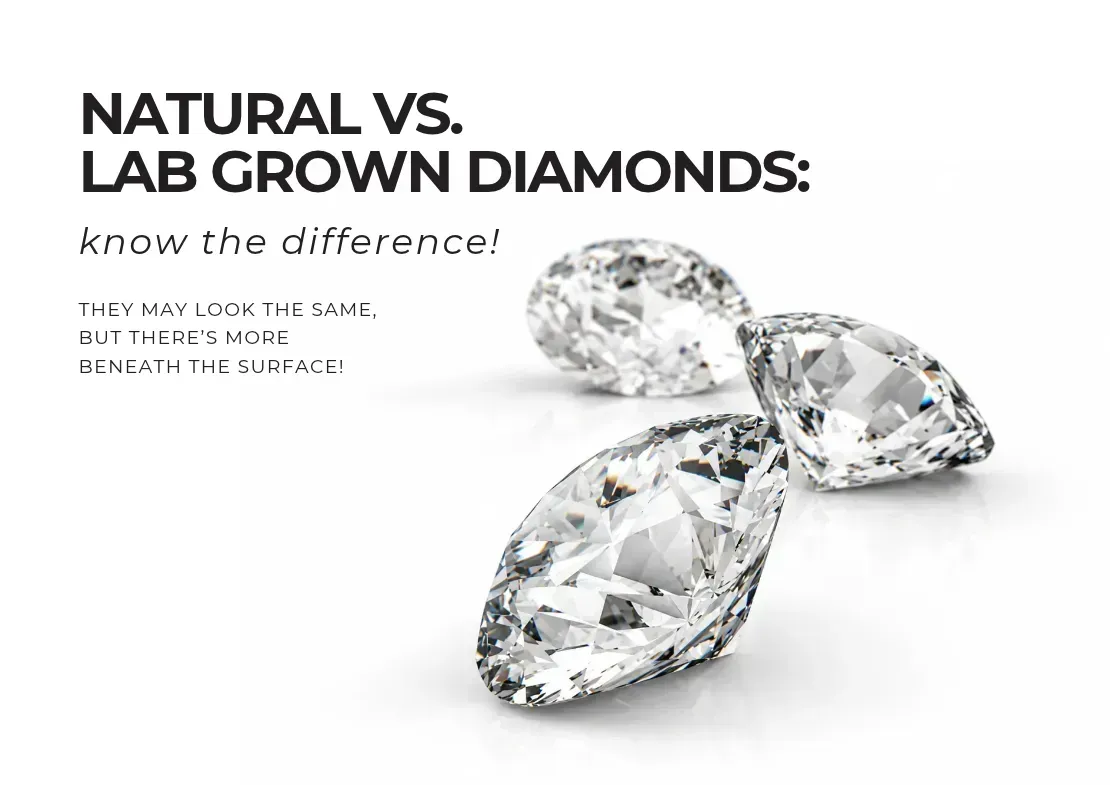
The important point is that lab grown vs. natural diamonds is primarily a comparison of origin, not whether one is a real diamond and the other is not. GIA notes that sophisticated testing can distinguish laboratory-grown diamonds from natural diamonds because their different growth environments leave identifiable characteristics.
Are Lab Grown Diamonds Real Diamonds?
Yes. Lab grown diamonds are real diamonds.
They have essentially the same chemical, physical, and optical properties as natural diamonds. Their difference from natural diamonds is their origin and the conditions under which they grow.
This is also why lab grown diamonds should not be confused with diamond simulants. Moissanite and cubic zirconia can resemble diamonds, but they are different materials with different chemical and physical properties.
Why Do Lab Grown Diamonds Usually Cost Less?
Price is one of the biggest differences shoppers notice when comparing lab grown vs. natural diamonds.
Lab grown diamonds can generally be purchased for less than comparable natural diamonds because their supply is created through laboratory production rather than being dependent on the discovery and recovery of naturally formed stones.
However, the exact price difference depends on factors such as carat weight, cut, color, clarity, shape, certification, and setting. A specific percentage should not be assumed across every diamond.
When comparing engagement rings, look at the complete specifications rather than comparing price alone. A lower-priced diamond with weaker cut or clarity may not provide the same appearance as another stone with different specifications.
Can You Tell the Difference Between Lab Grown and Natural Diamonds?
Not reliably with the naked eye.
Lab grown diamonds can have essentially the same optical properties as natural diamonds, so simply looking at a finished stone generally will not tell you whether it was grown in a laboratory or formed naturally. Specialized gemological equipment and laboratory testing can identify the difference.
This is one reason a grading or identification report can be useful when purchasing a diamond.
Does the 4Cs Matter for Both Types?
Yes. The 4Cs cut, color, clarity, and carat weight remain important when comparing diamonds.
Cut affects how effectively the diamond handles light and can have a major effect on its appearance. Color and clarity help describe the stone's visual characteristics, while carat refers to weight.
Whether you choose a lab grown or natural diamond, compare the actual specifications of the individual stone rather than assuming that its origin determines its appearance.
You can also consider the diamond shape when selecting an engagement ring. Beverly's Jewelry offers lab grown options in shapes including round, oval, emerald, and cushion.
Which Should You Choose: Lab Grown or Natural?
There is no single answer for every shopper.
A lab grown diamond may appeal to someone who wants a diamond with the same essential material characteristics as a natural diamond while allocating more of the budget toward size, setting, or other ring details.
A natural diamond may appeal to someone who specifically values its geological origin and natural formation history.
The better comparison is to look at your priorities: origin, budget, diamond specifications, certification, and the type of engagement ring you want.
If you're ready to compare ring styles, you can also look through Beverly's engagement ring collection and compare different settings and designs.